
Introduction
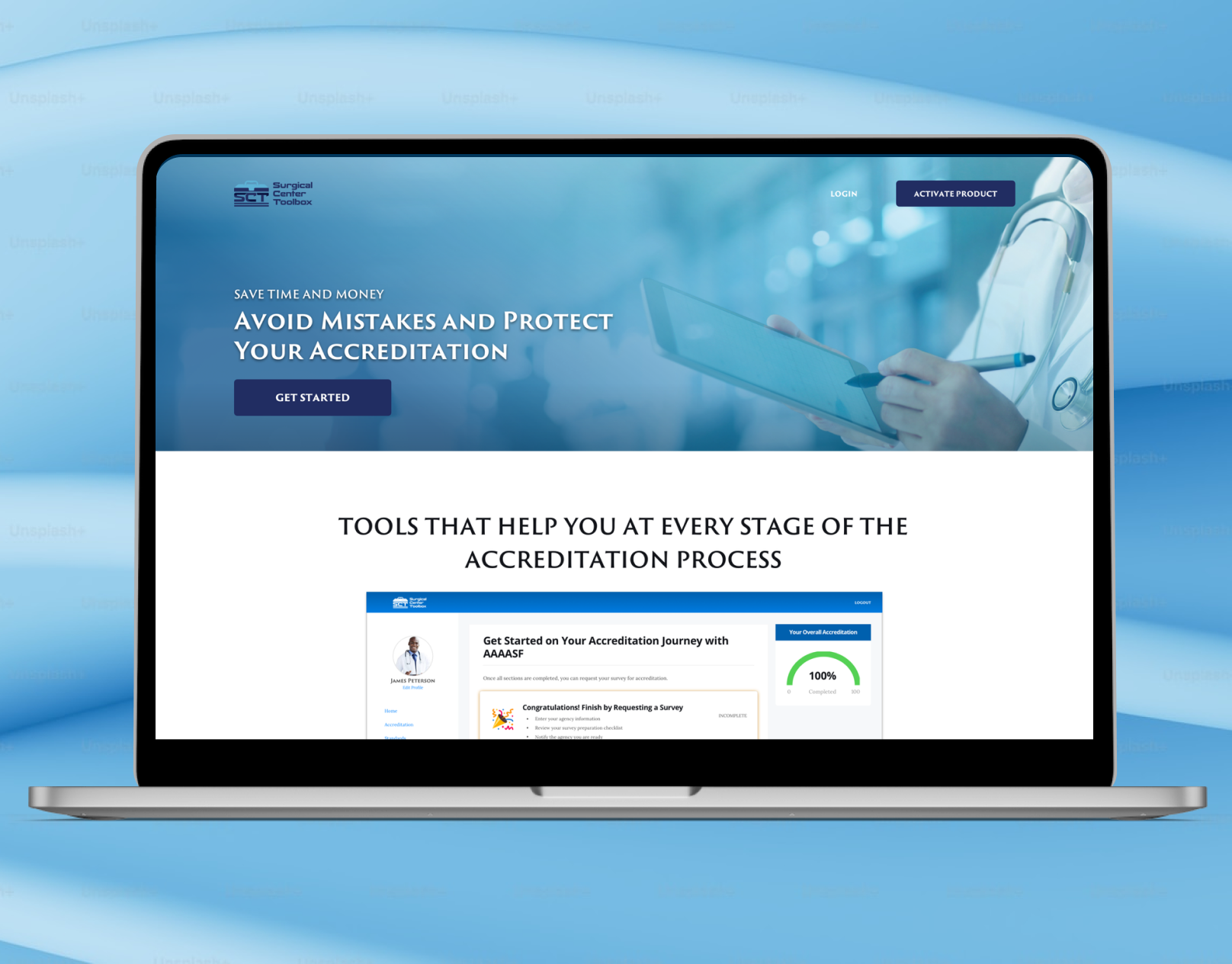
Accreditation for ambulatory surgery centers, known as ASCs, can be an expensive and complicated process. Currently there are very little tools to help surgery centers prepare for their accreditation survey or help ensure ongoing compliance. I conducted research and designed a set of applications that addressed key problems related to ASC accreditation.
About Accreditation Compliance Solutions (ACS)
Accreditation Compliance Solutions, LLC is a subsidiary of HOTB Software Solutions, Inc. ACS combines over 20 years of best practices and through their product, Surgery Center Toolbox (SCT), offers a solution to help surgery centers prepare for surveys and maintain compliance.

Researching and Defining the Problem
The team knew that accreditation was expensive, frustrating, and time-consuming. By performing research on the industry, interviewing subject matter experts in the field, and reviewing past case studies from consultants, we were able to identify some key problems.
Results driven from research: Key problems to focus on were better on boarding, training, and policies and procedures.
Case Study Findings
People Involved With Accreditation
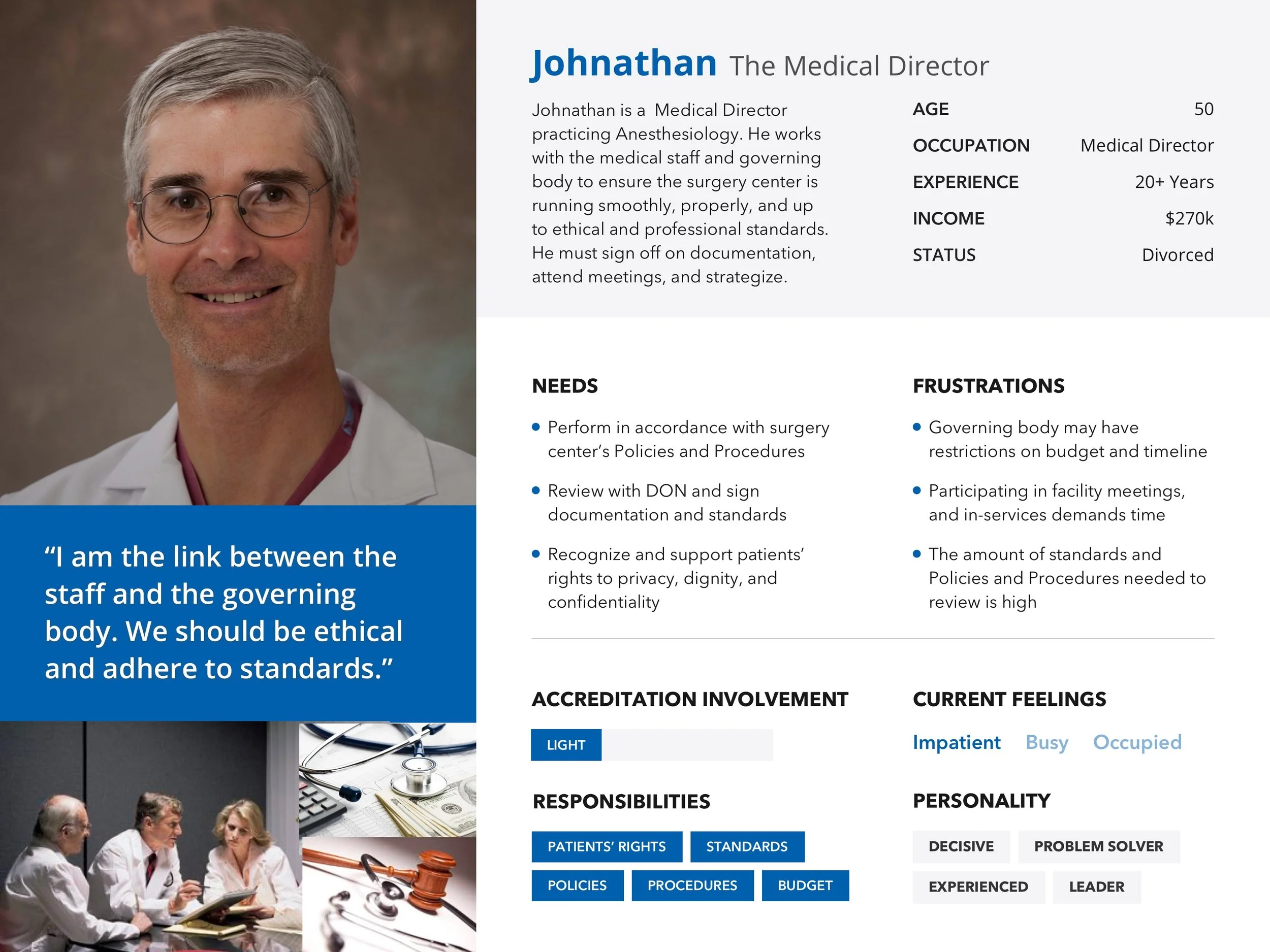
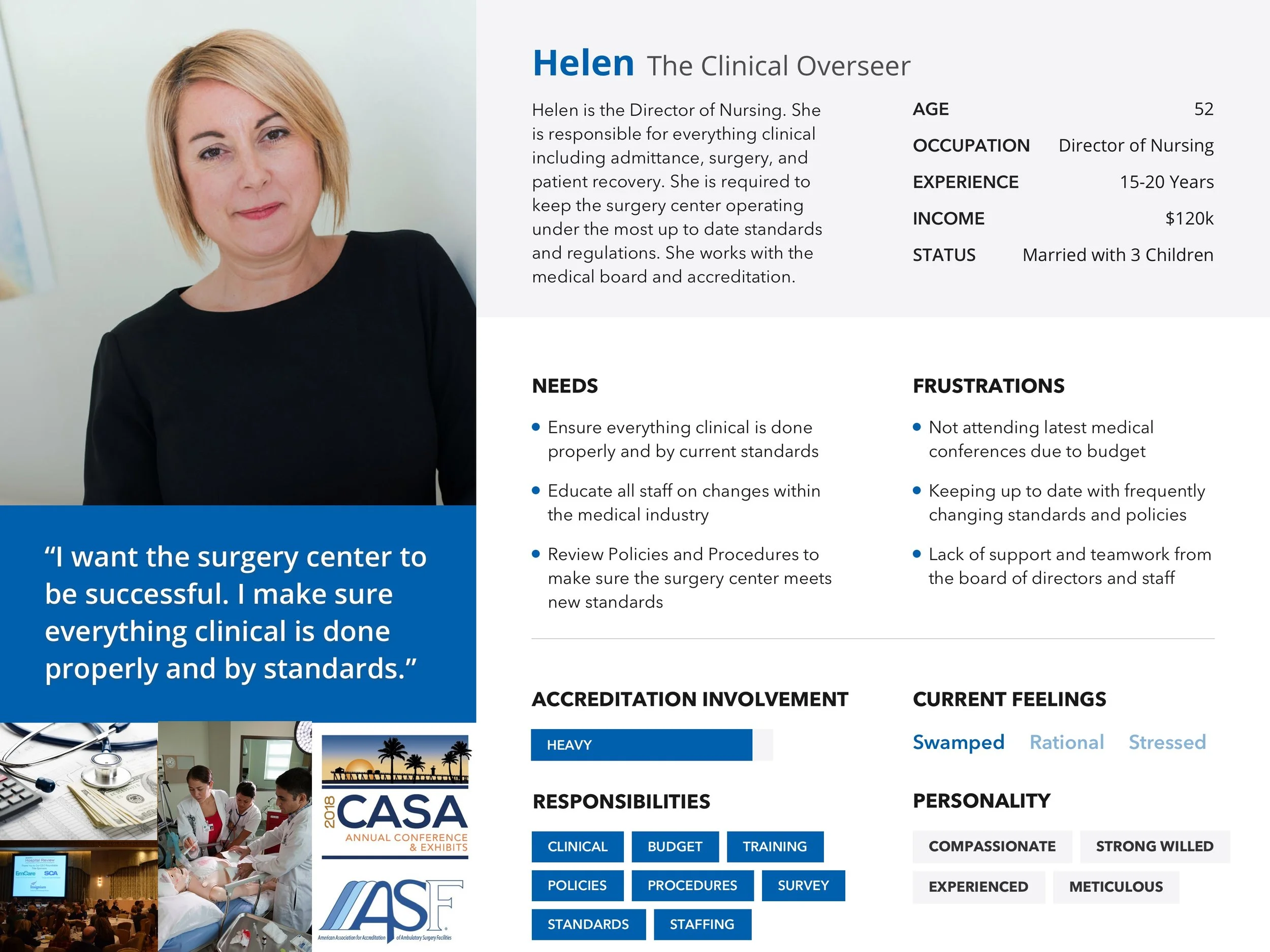
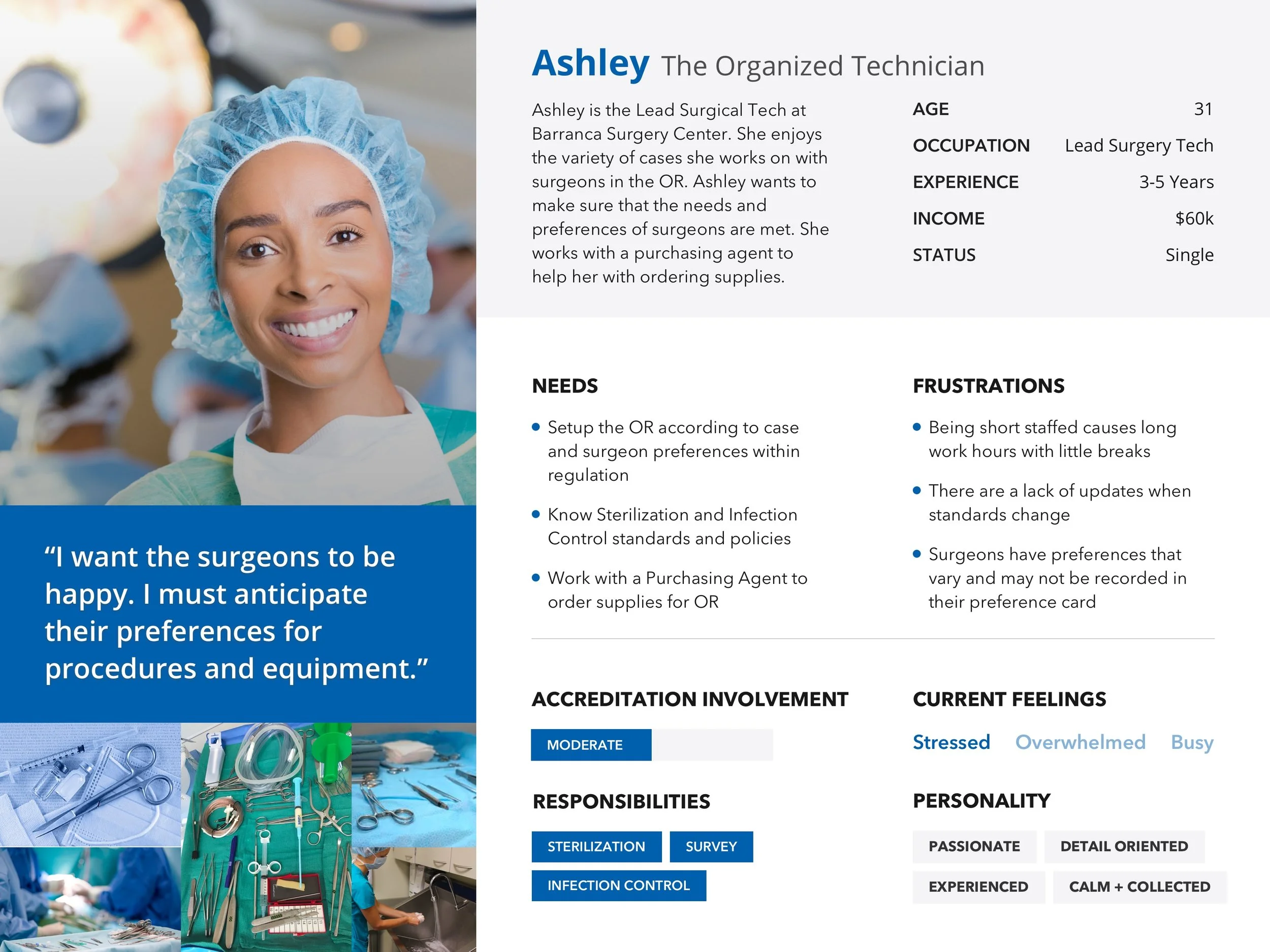
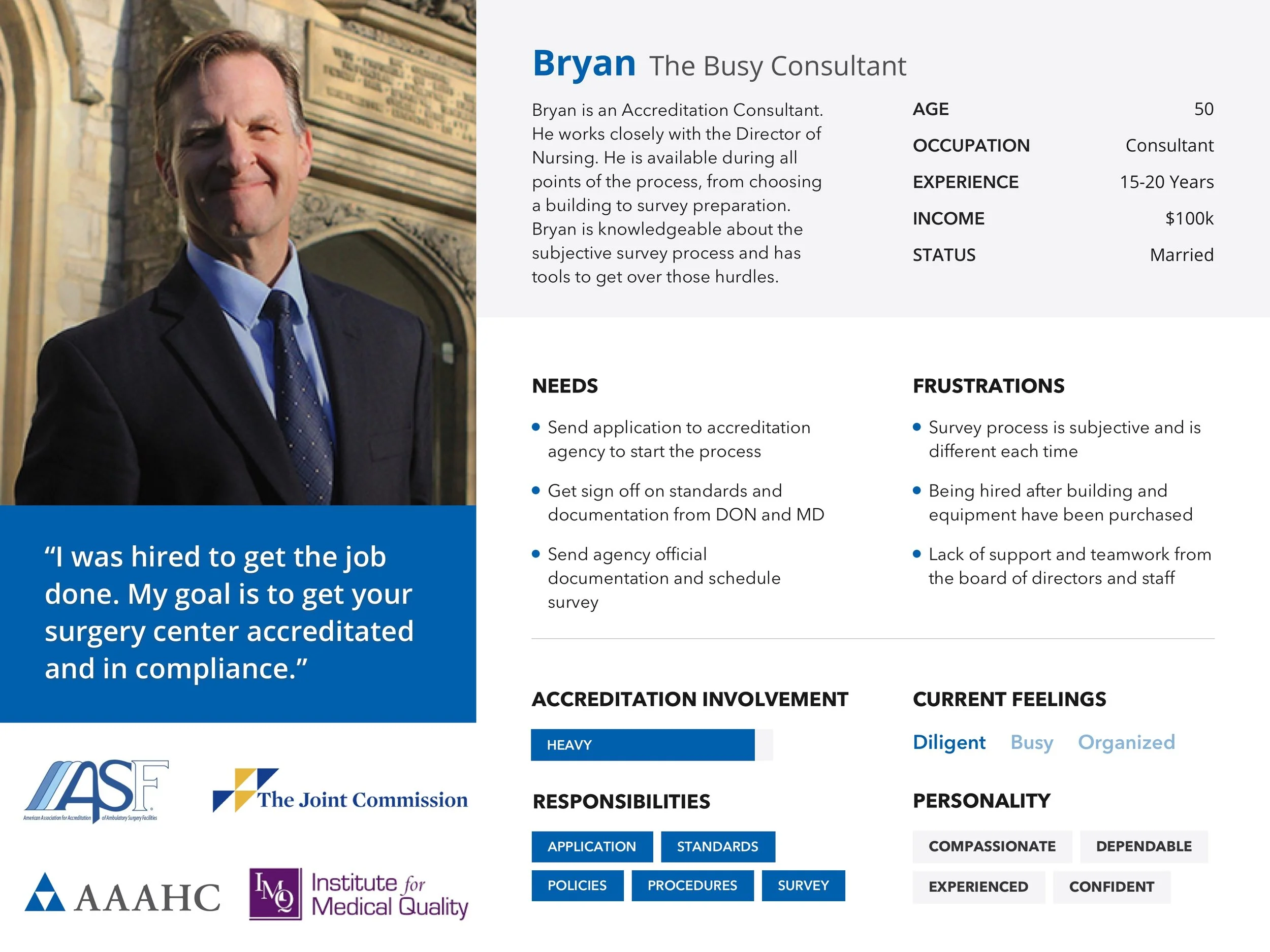
There are four types of people involved in accreditation. Each of them play different roles and their involvement throughout the accreditation process can vary.
Emphasizing involvement allowed us to redirect requests that would not be impactful towards the primary users of the application.
Key Finding: The initial assumption that the medical director was the most involved, proved false. Through some interviews, the team discovered the director of nursing was the primary user. That meant we needed to address her major pain point, agency standards and policies and procedures.
User Personas
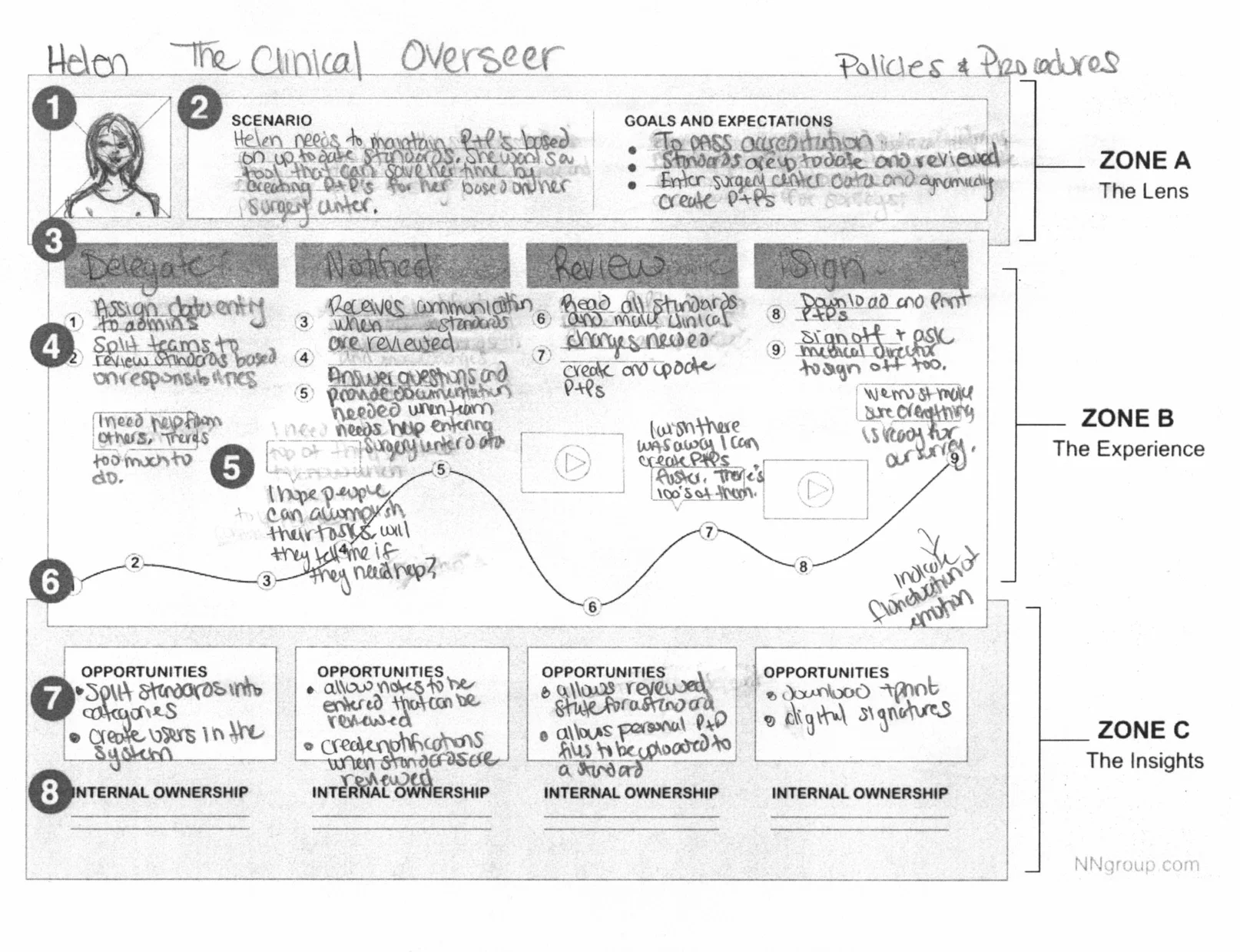
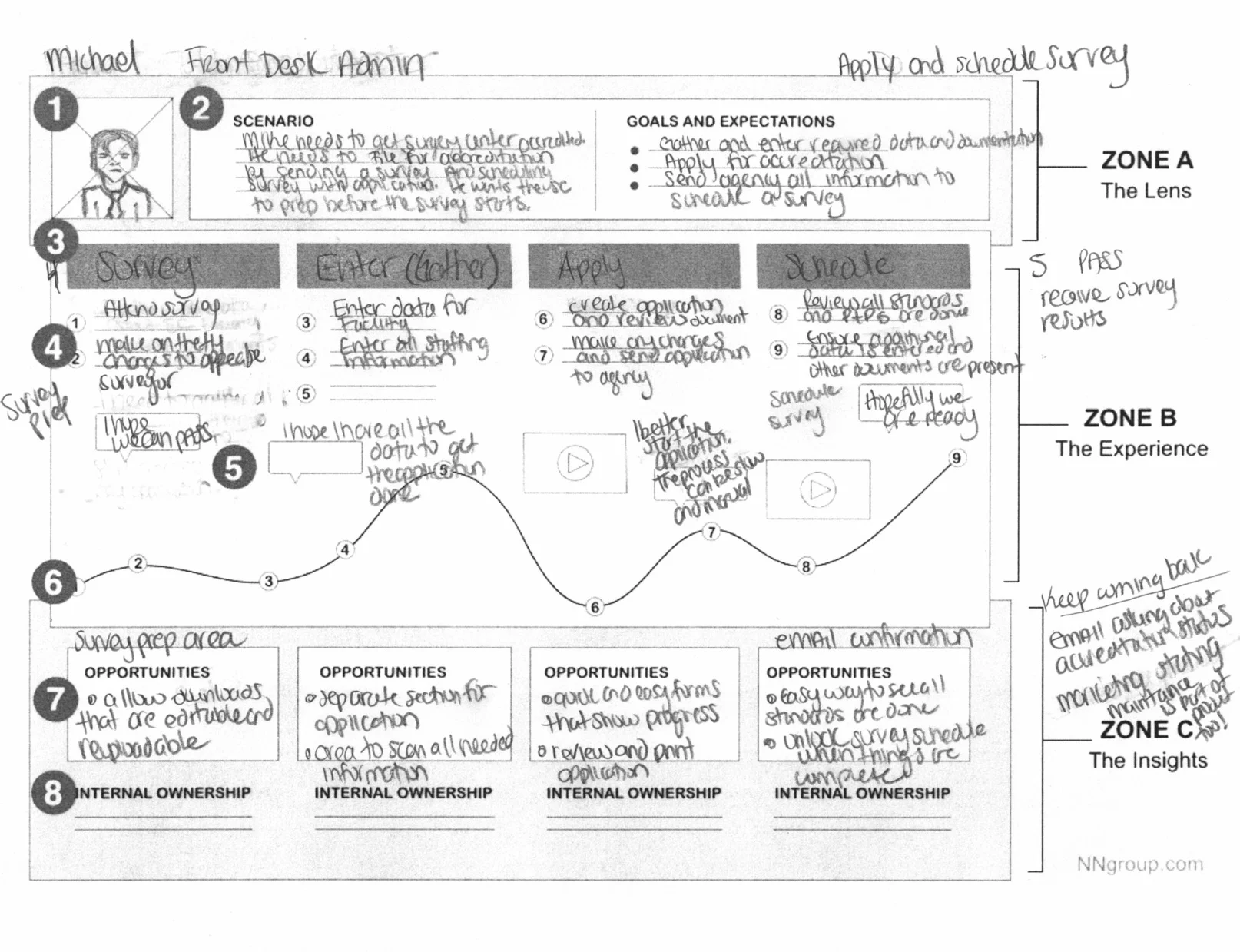
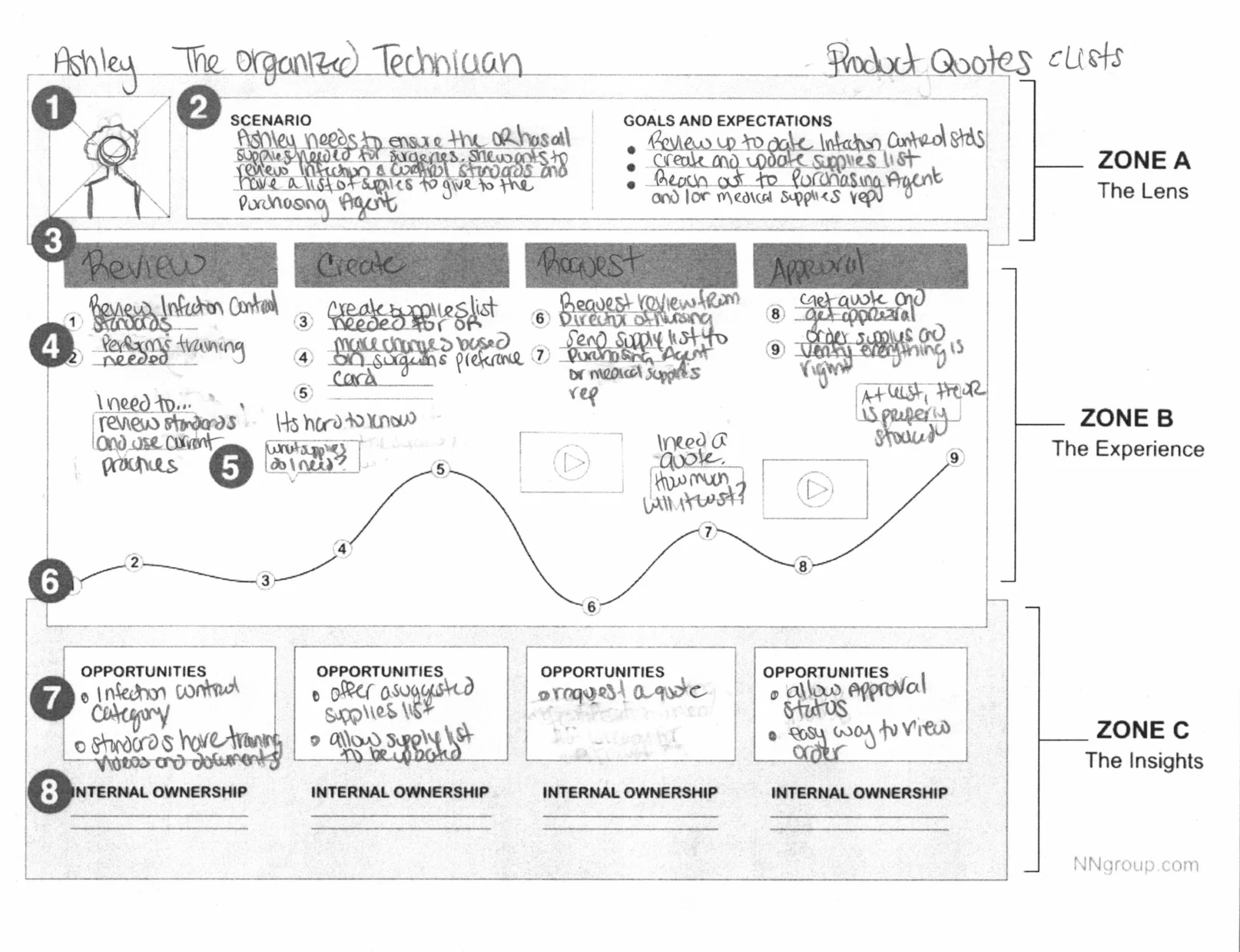
User Journey Maps
The Complication With Supporting All Accreditation Agencies
Oftentimes, requests from the business don’t always align well with the project, the users, or is technically feasible within a budget. Once it was determined that the director of nursing needed agency standards, It was important to obtain copies for all the standards from all four agencies.
Due to the budget, lack of networking between the business and agency, there was one agency that we could not obtain data for and perform research on. Therefore, the software would not support this agency by launch.
Accreditation Agencies

Researching Existing Solutions
It turns out that there was not a complete solution to help surgery centers apply for new accreditation. Directors of nursing were relying on their experience and still failing.
Most surgery centers attempted accreditation, failed, and then as a last resort hired a consultant.
Card Sorting and Information Architecture (I/A)
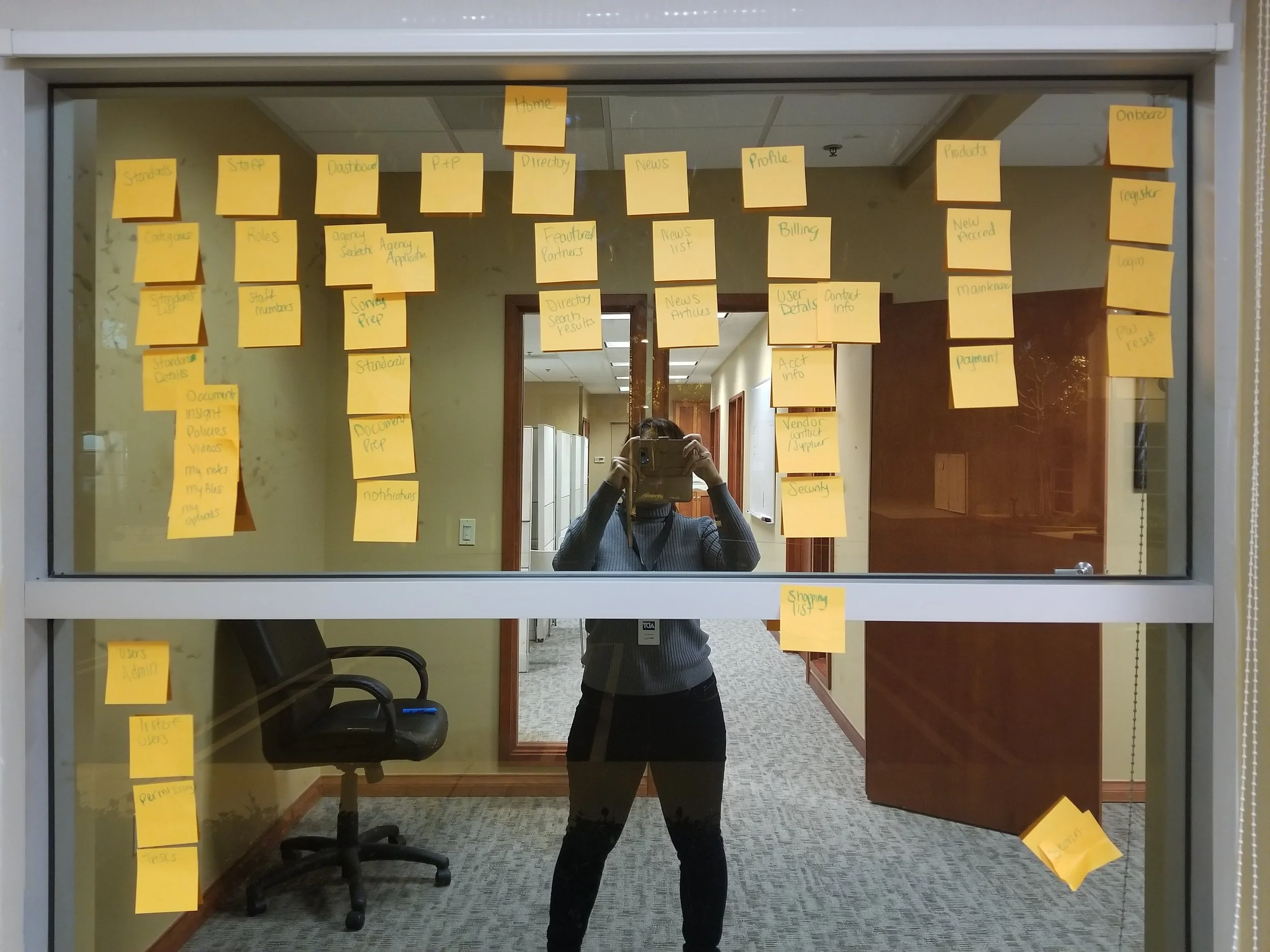
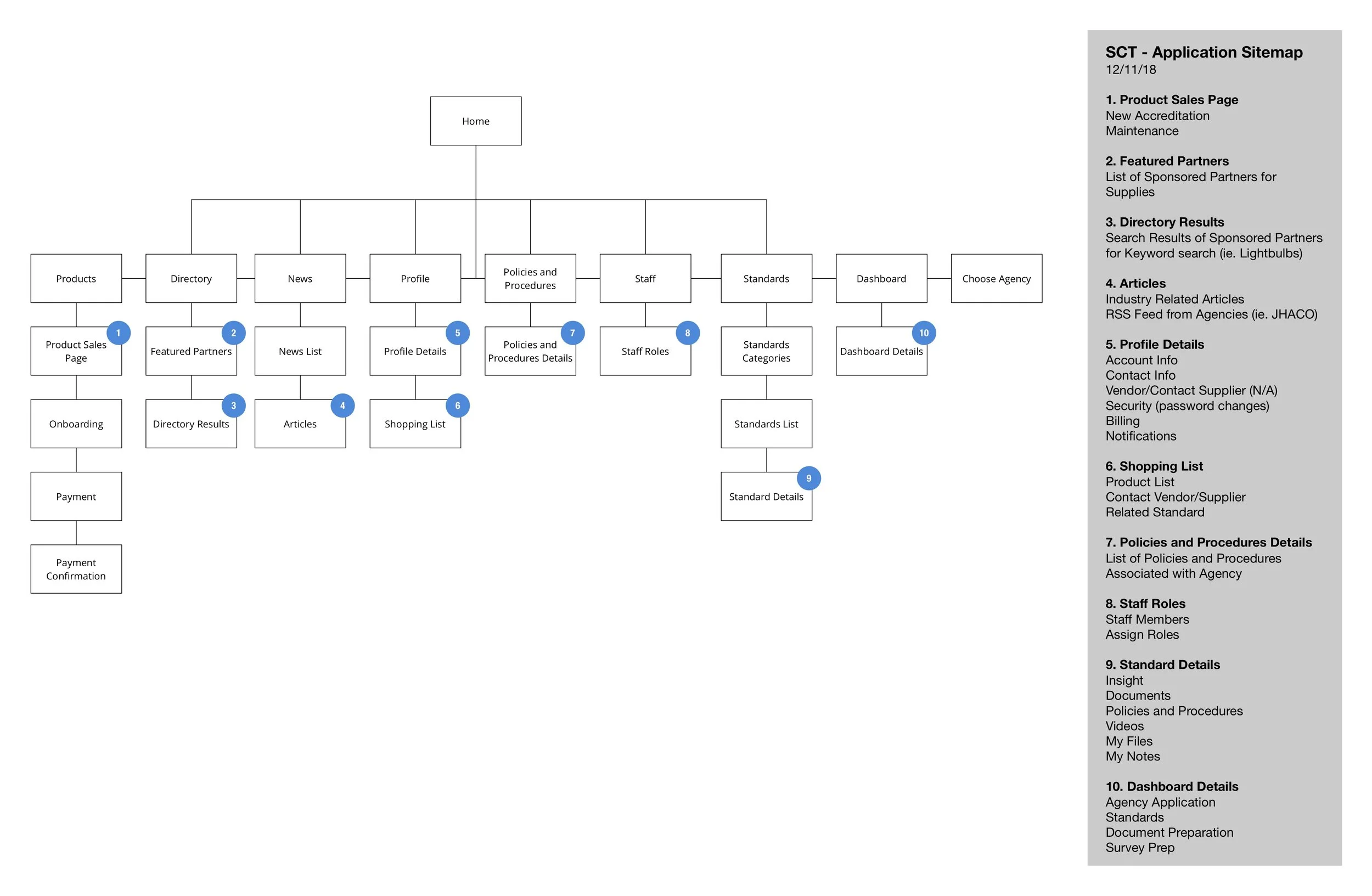
The team started working on defining a solution for what kind of content the application would provide, the sections that would later need designing, and the information architecture.
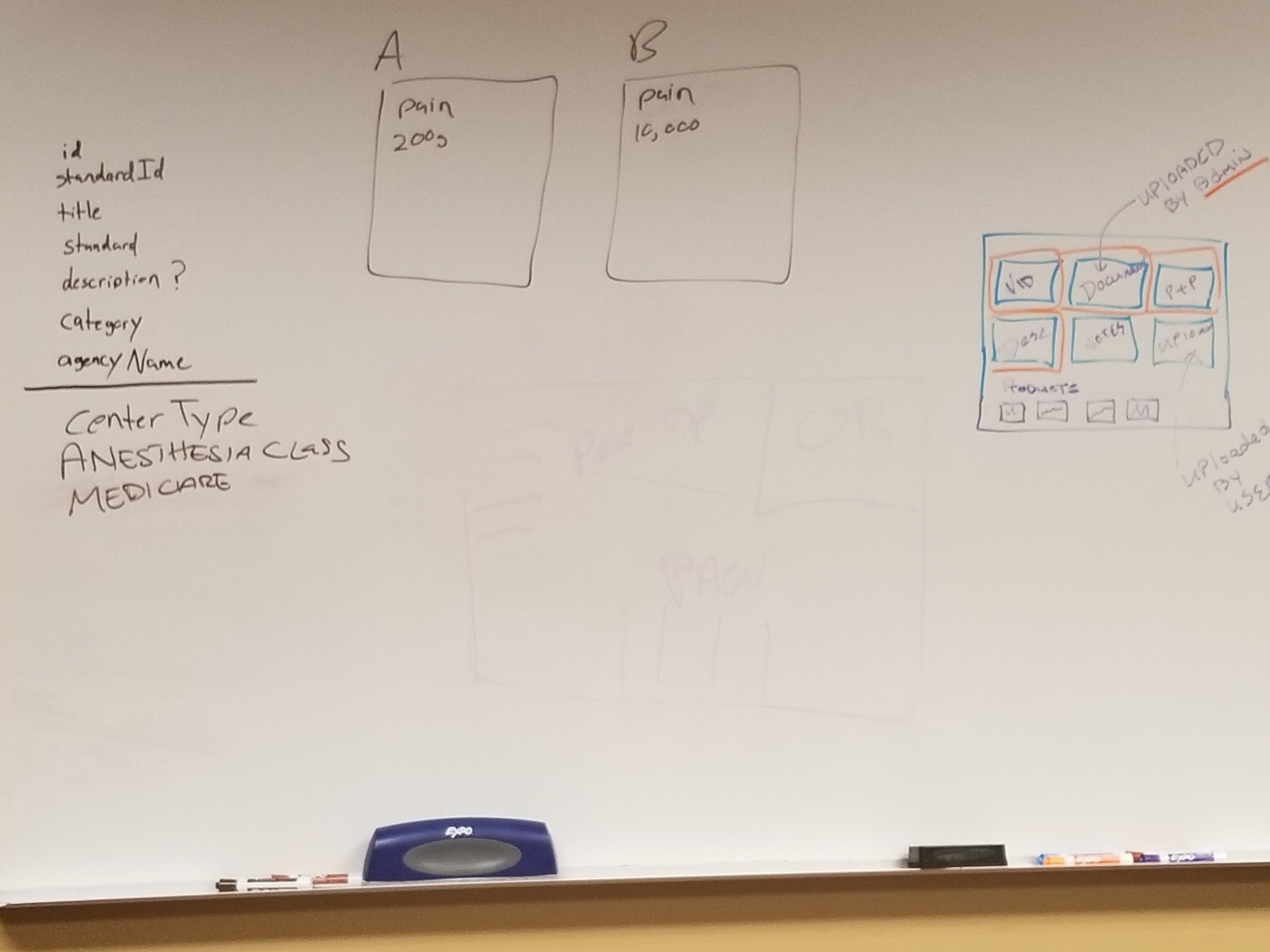
Using white-boarding sessions, card sorting, reviewing example agency applications, and findings from previous research, allowed us to come up with a site map.
Card Sorting and Site Map
Designing Each Section: Remember the Goal
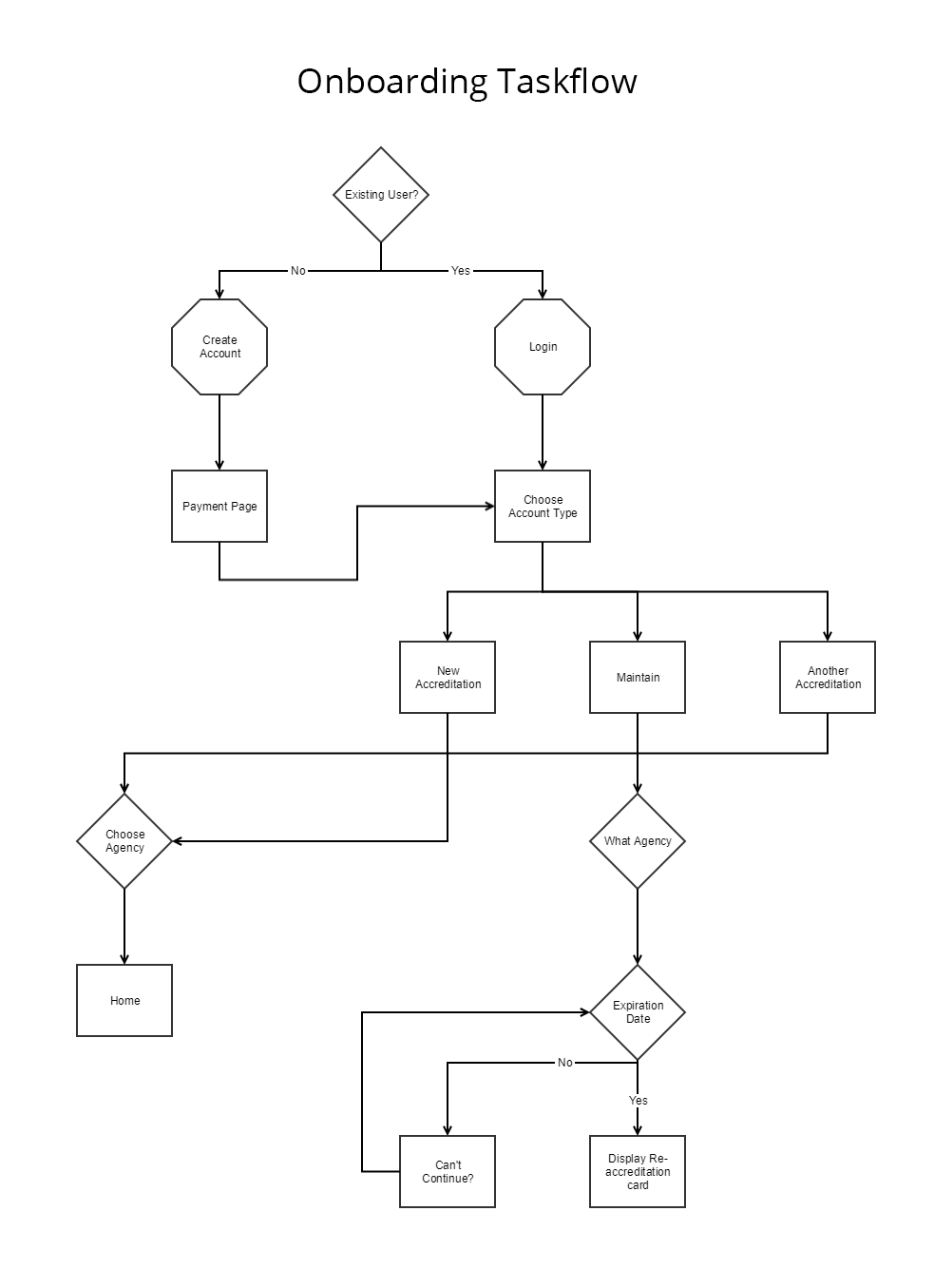
Sections were divided into epics inside Jira. The team went through each section and followed a similar process.
Defined user stories
Wrote down goals for section
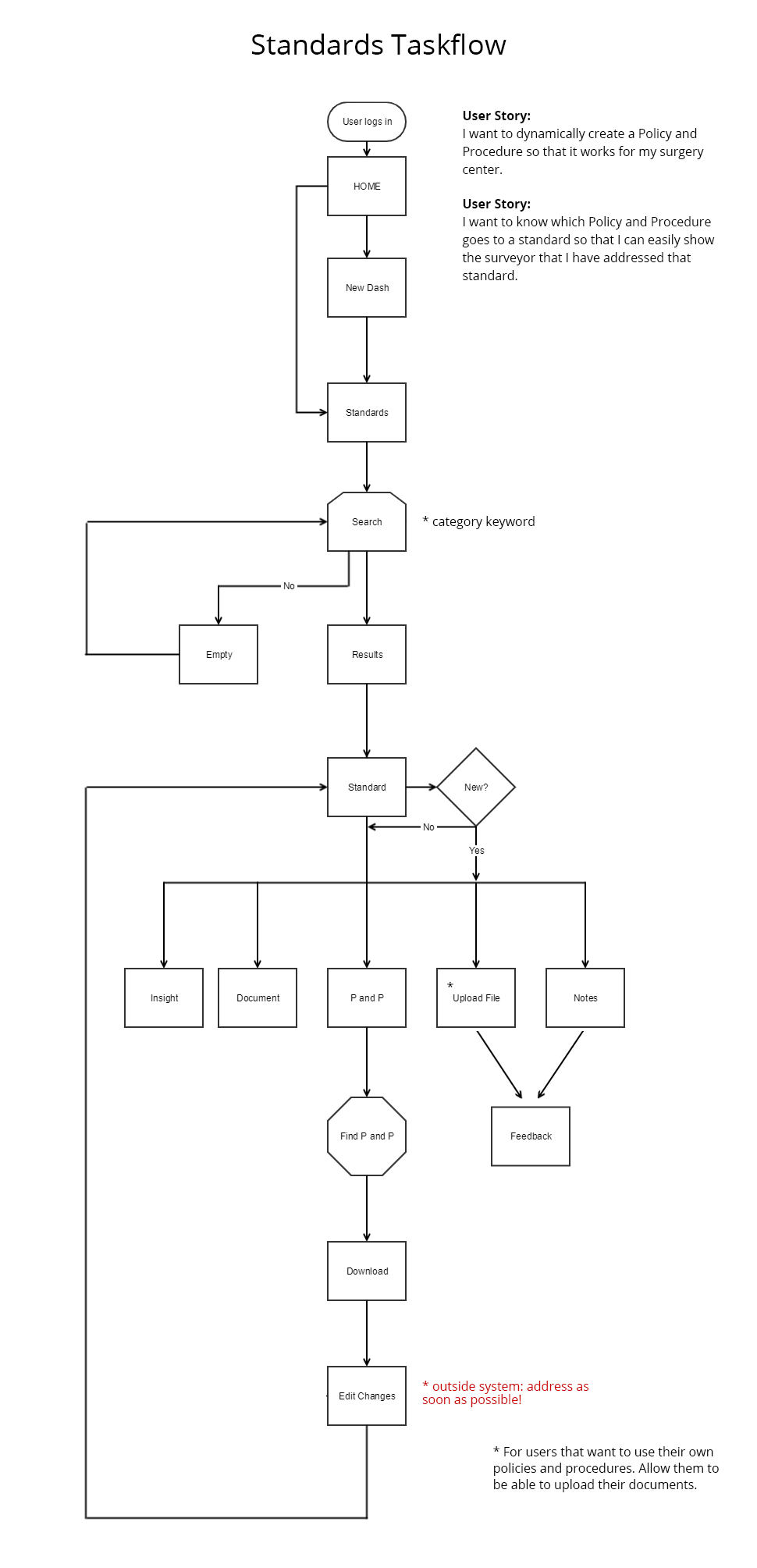
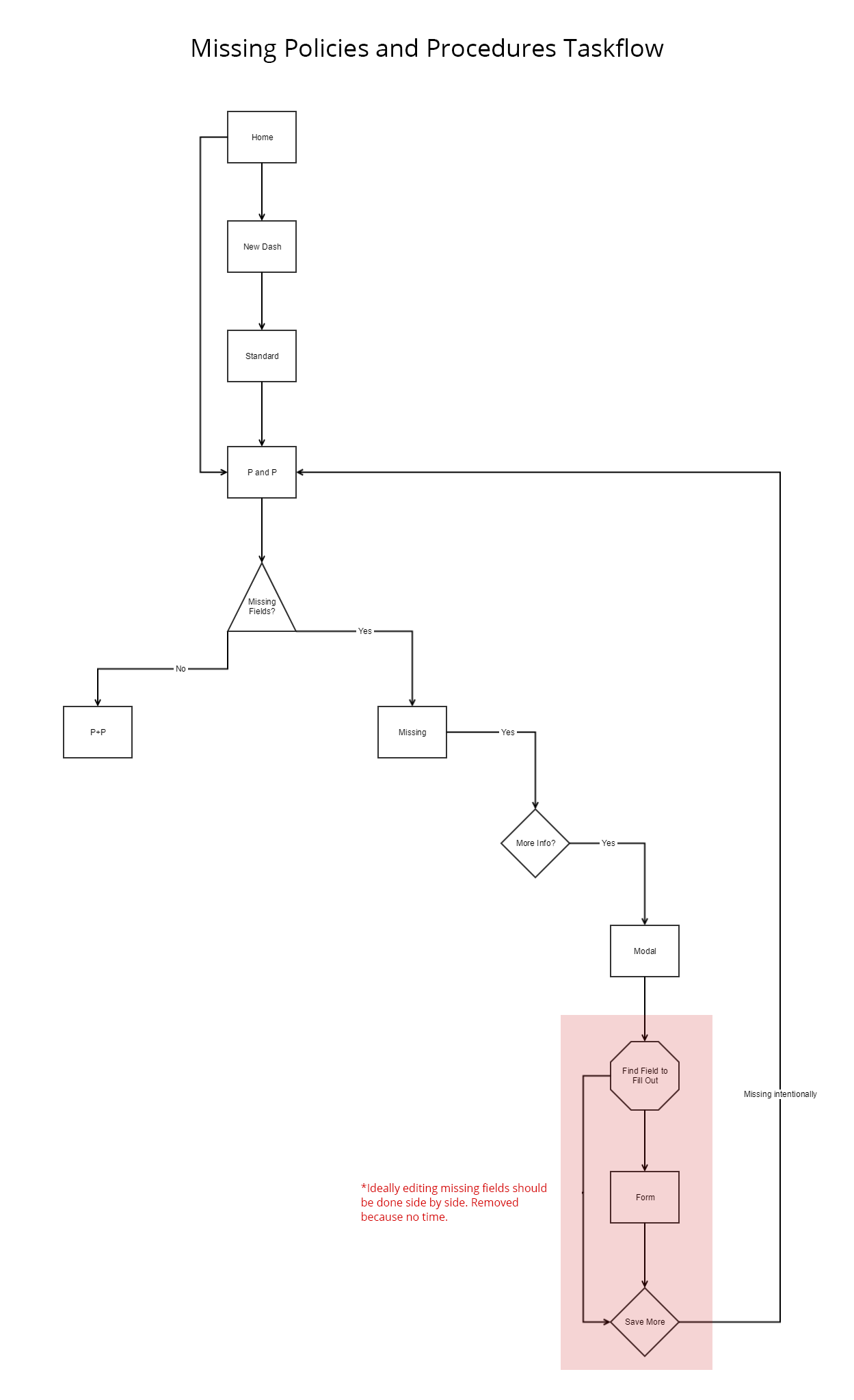
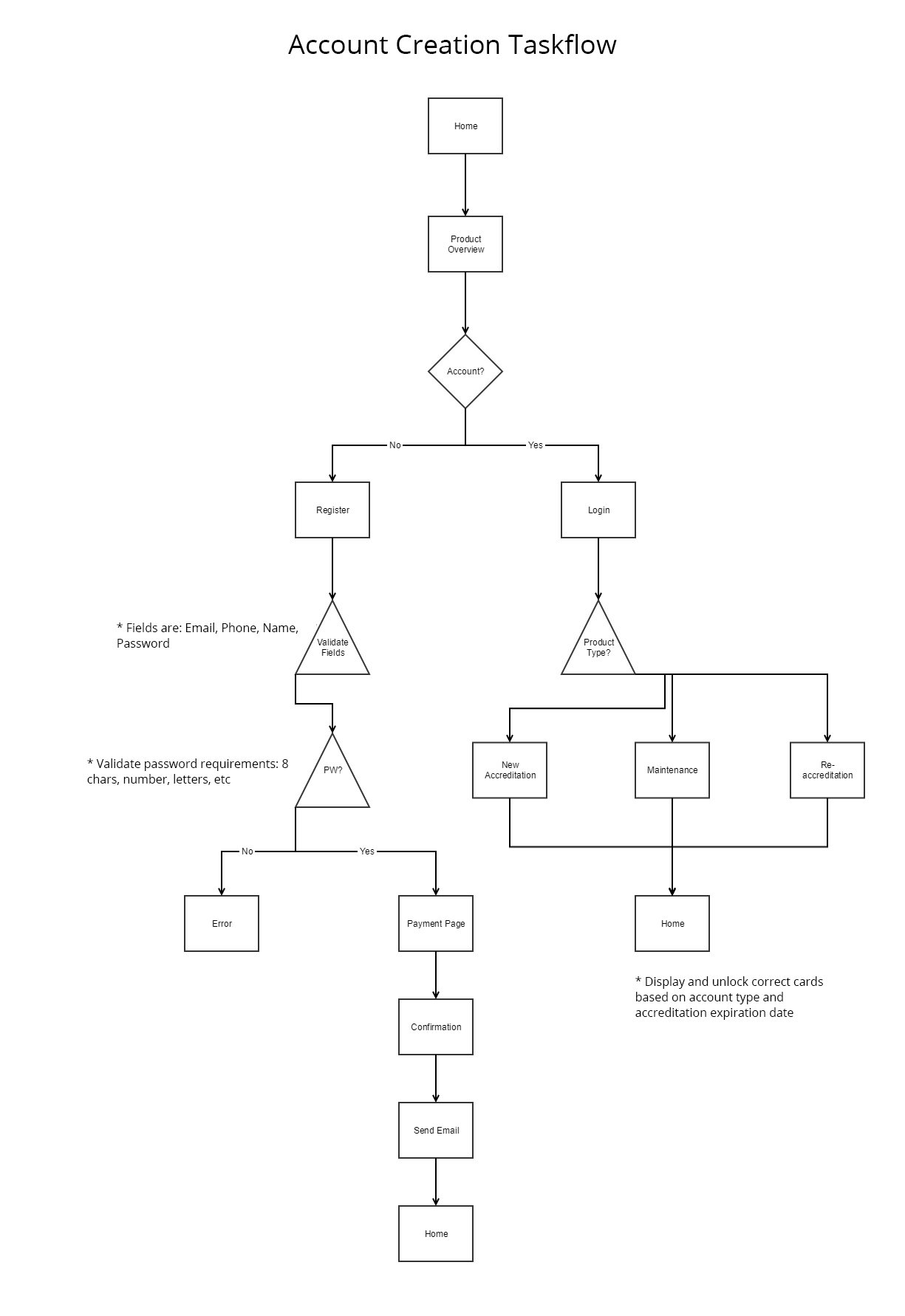
Created task flows
Tested flows for gaps and continued to iterate
Reviewed with team and development
It may seem like a lot of work before even sketching any interfaces down. However, I find this approach filters out a lot of issues quickly. Speaking with development also spared us some unnecessary heartache. Collaboration was key in quickly identifying issues.
Taskflows
Designing the User Interface
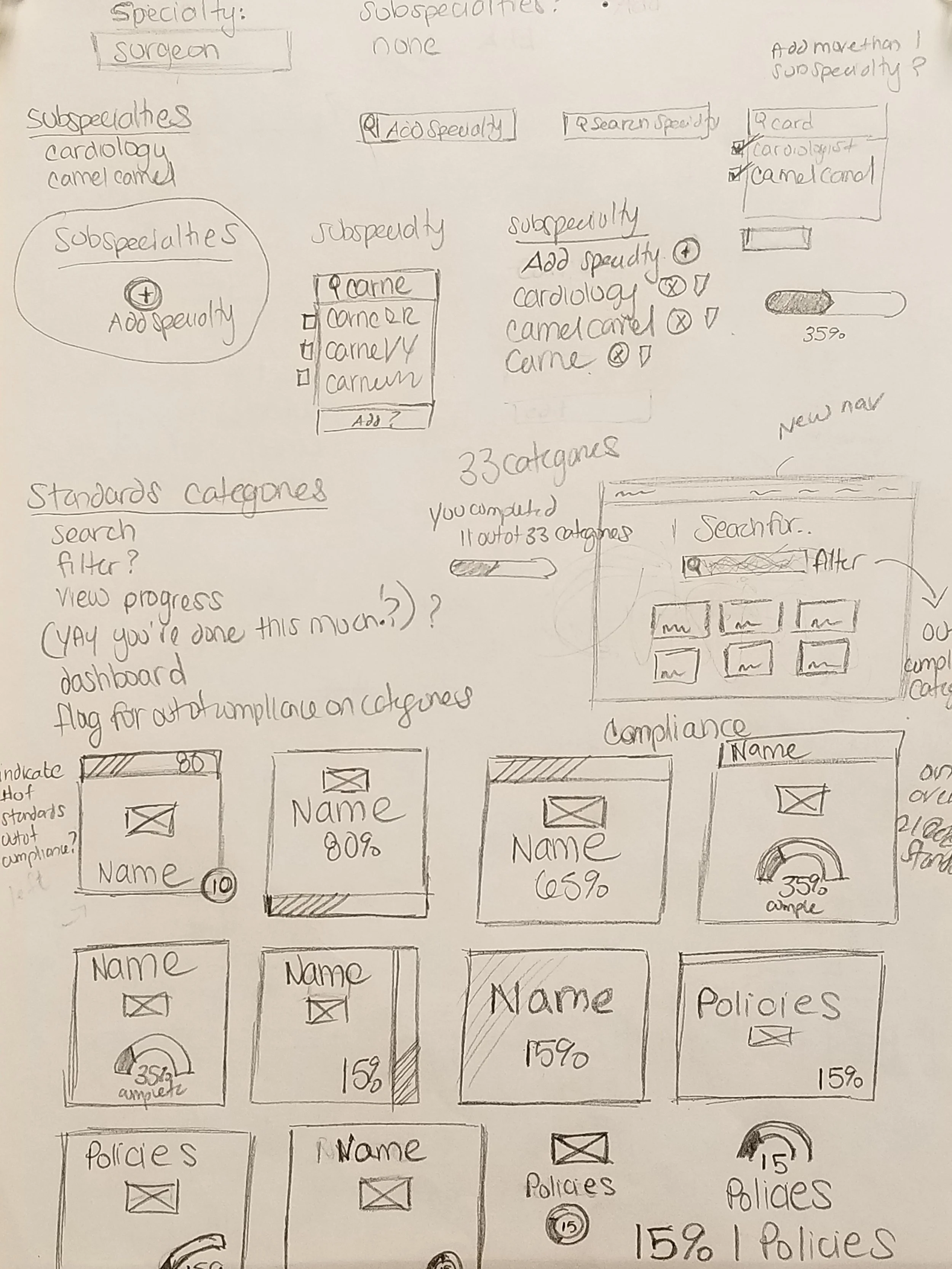
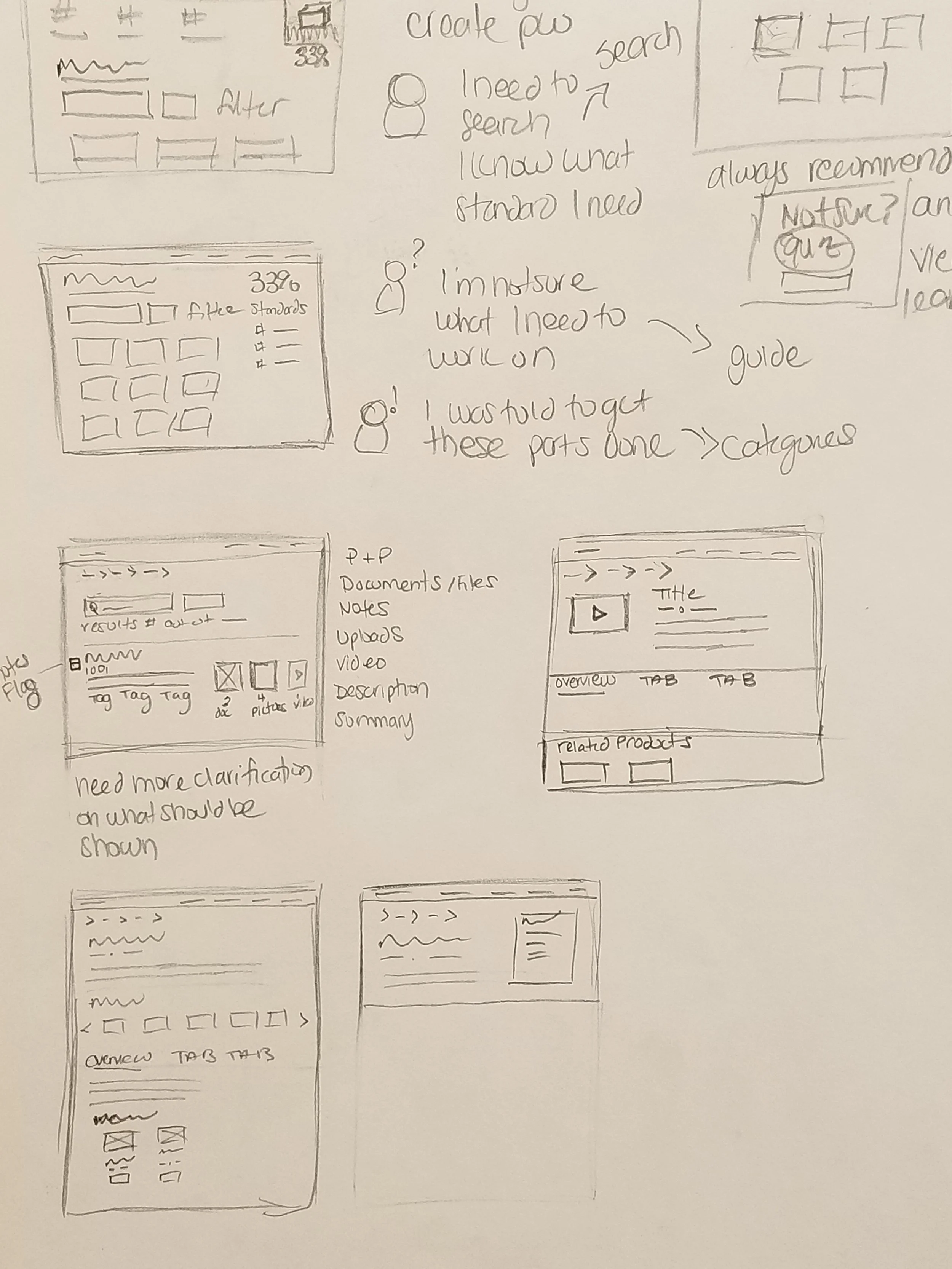
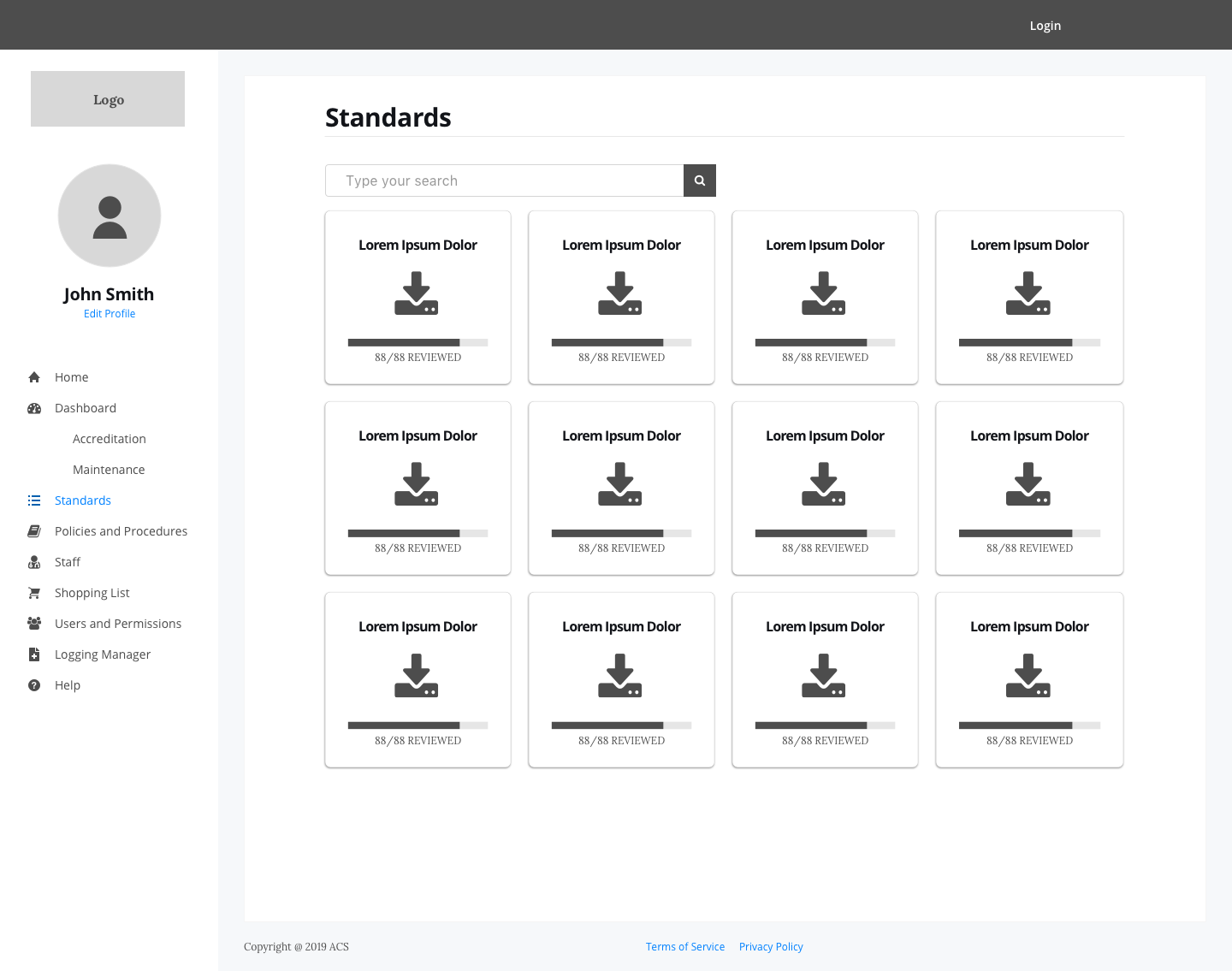
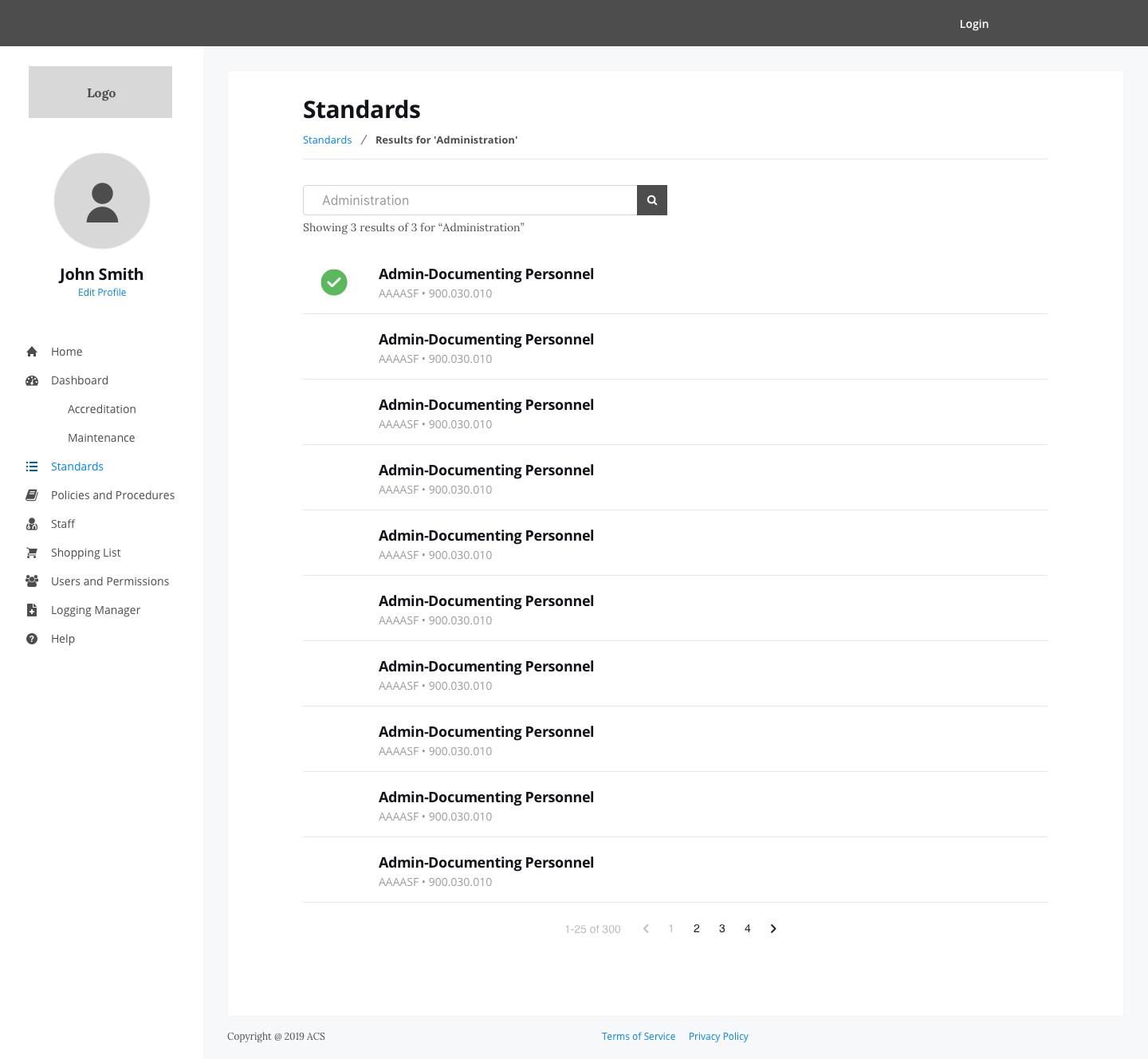
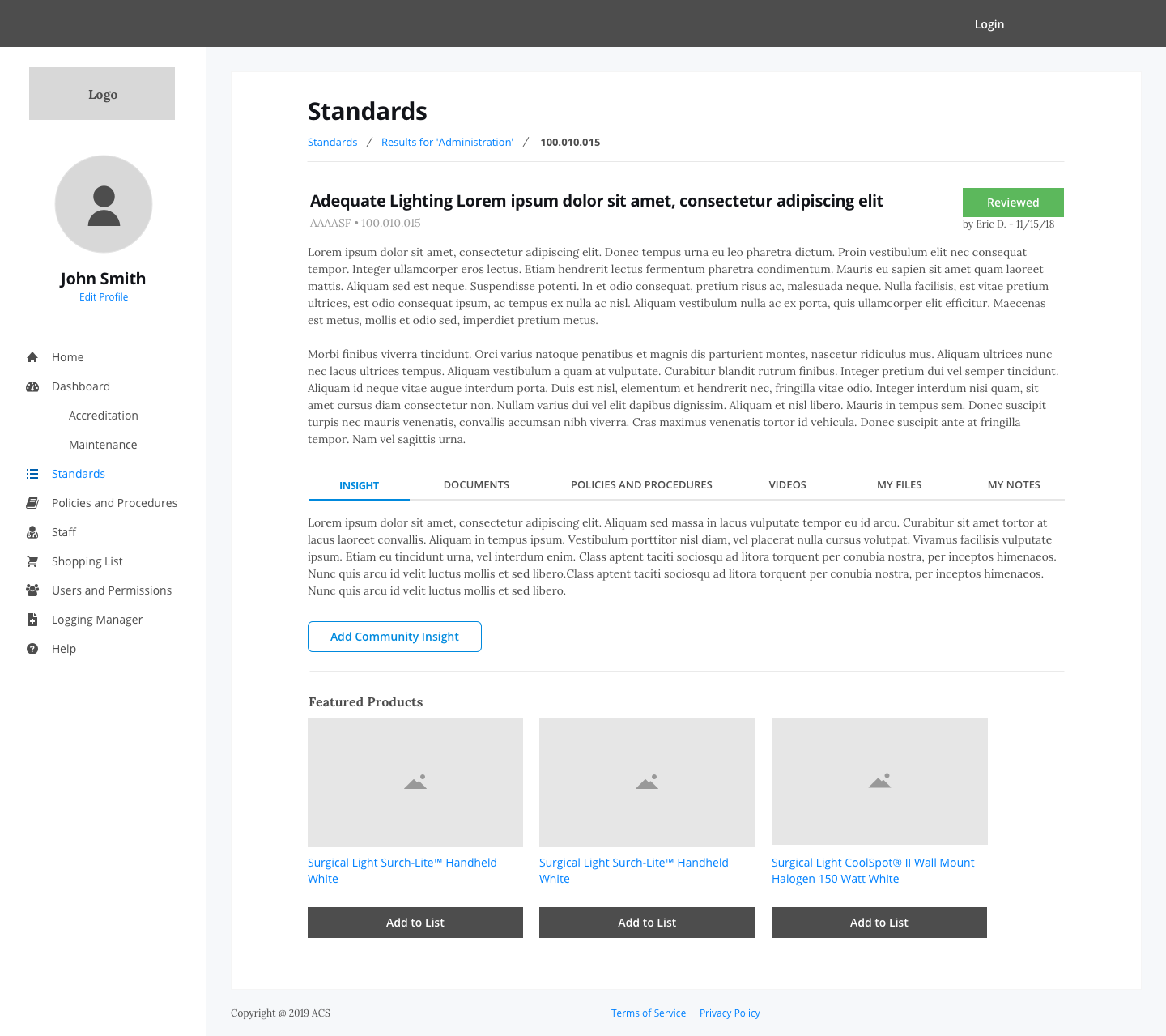
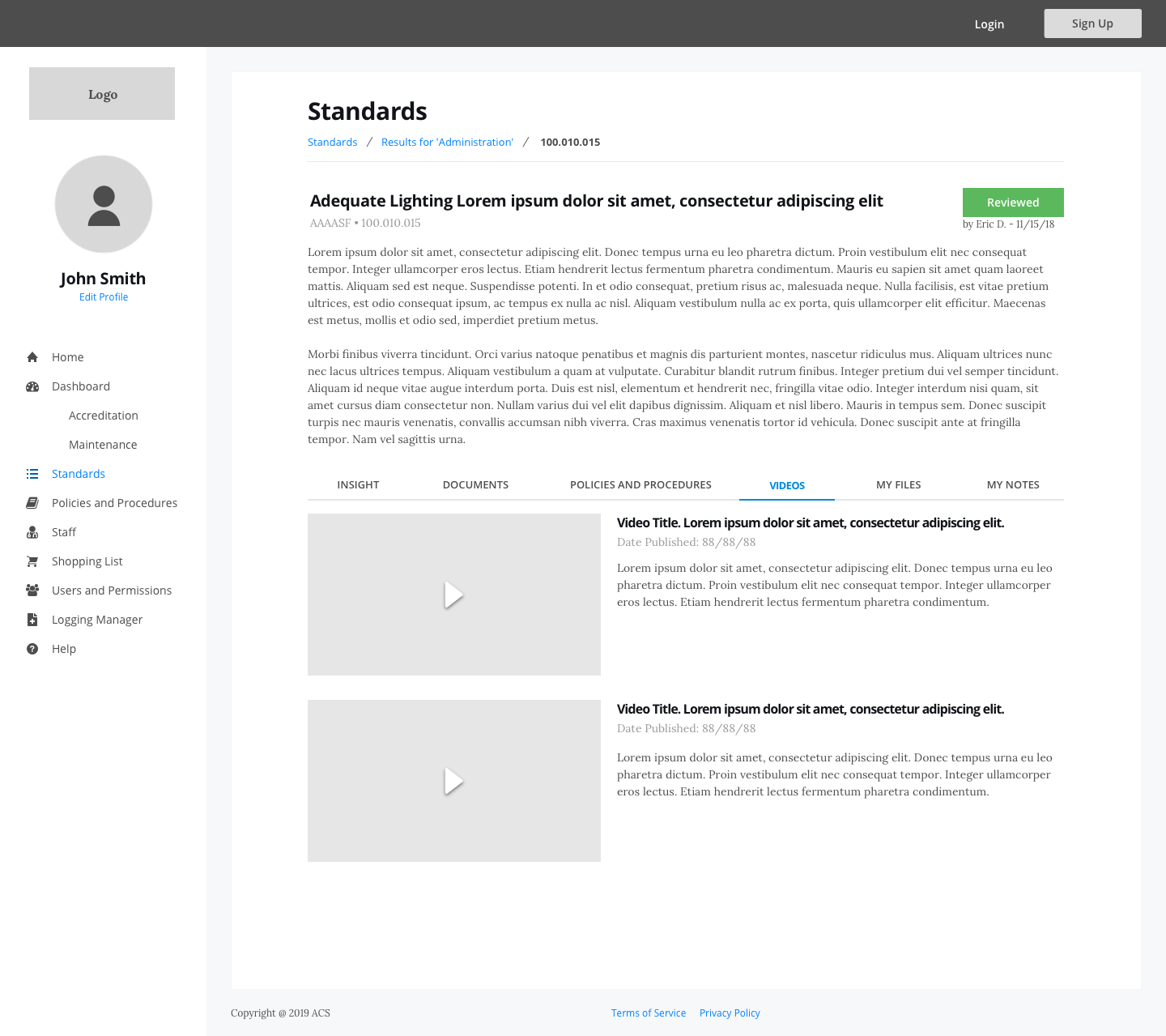
Designing the User Interface (UI) meant following a similar process: Research > Brainstorm > Sketch Concepts > Wireframe > Test Wireframes > Iterate.
Brainstorming, Sketches, and Wireframes
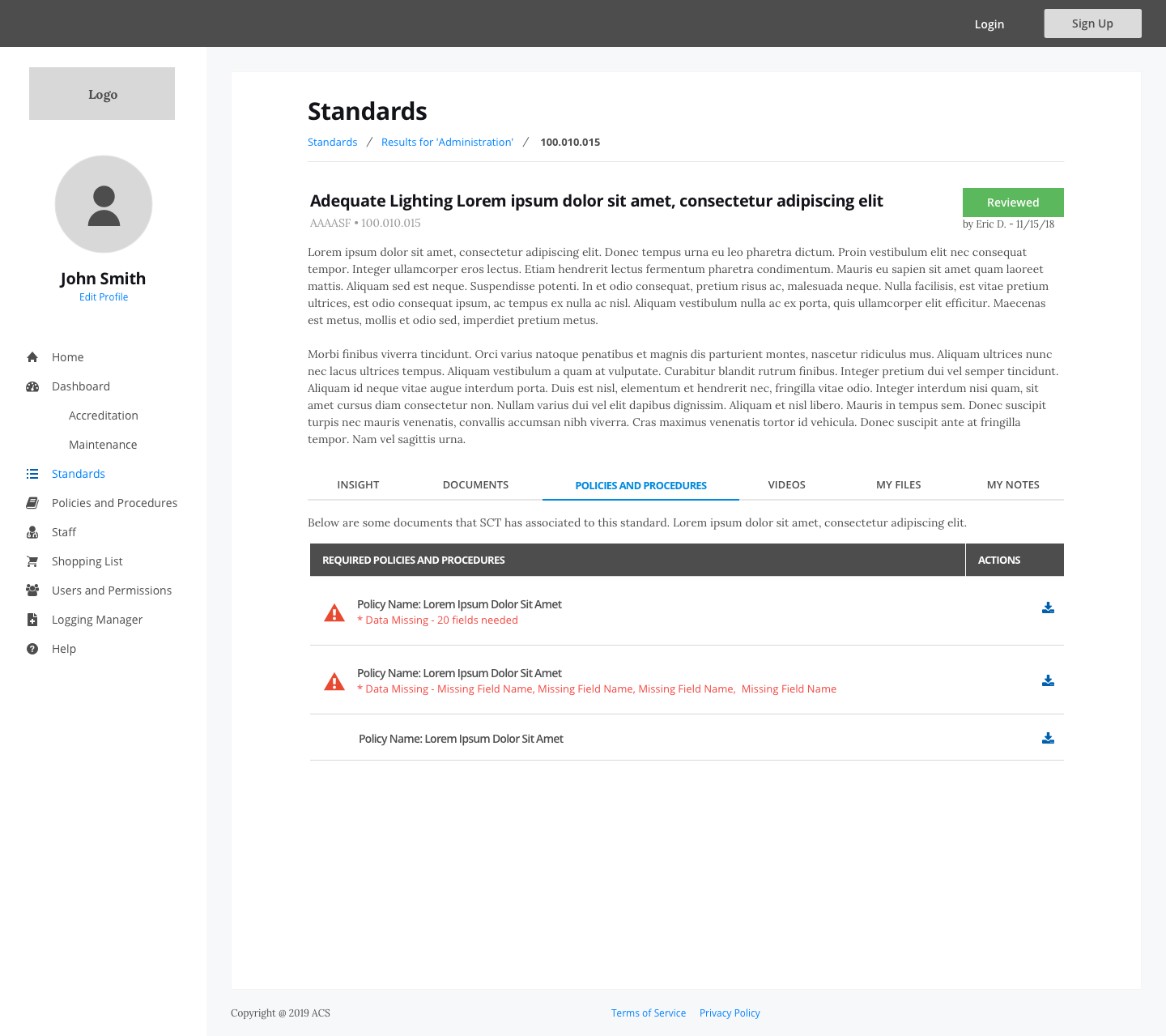
Testing the Flow
It is important to test the flow to make sure that each section works well with the entire flow of the application.
Creating a wireflow of the entire application makes it easy to identify holes in the design that may have been missed. For example, if someone completed their accreditation, there was no feedback loop to get the customer re-engaged. This was caught and a solution was designed for it.
Wireflows
Prototype, Test, and Iterate
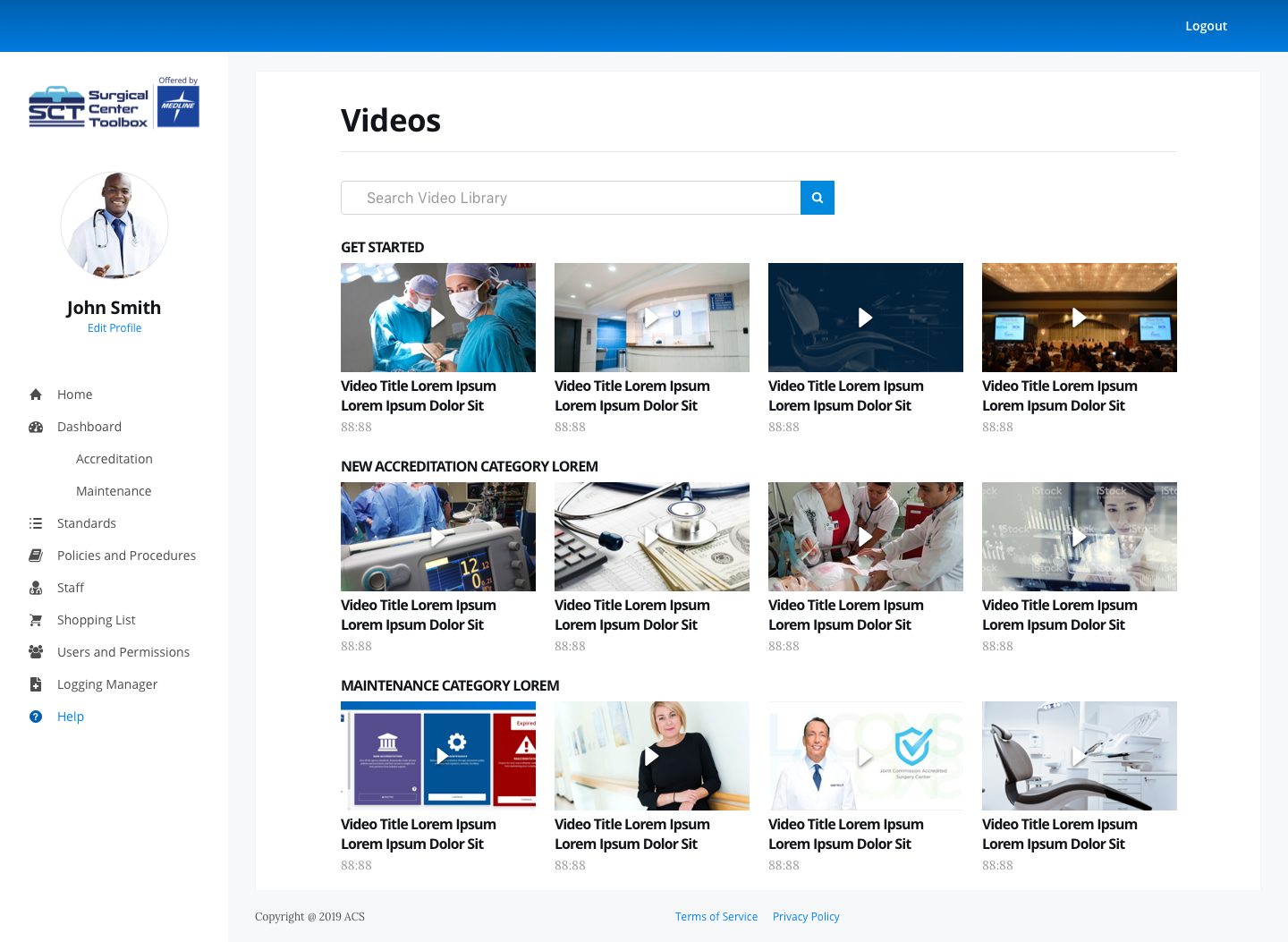
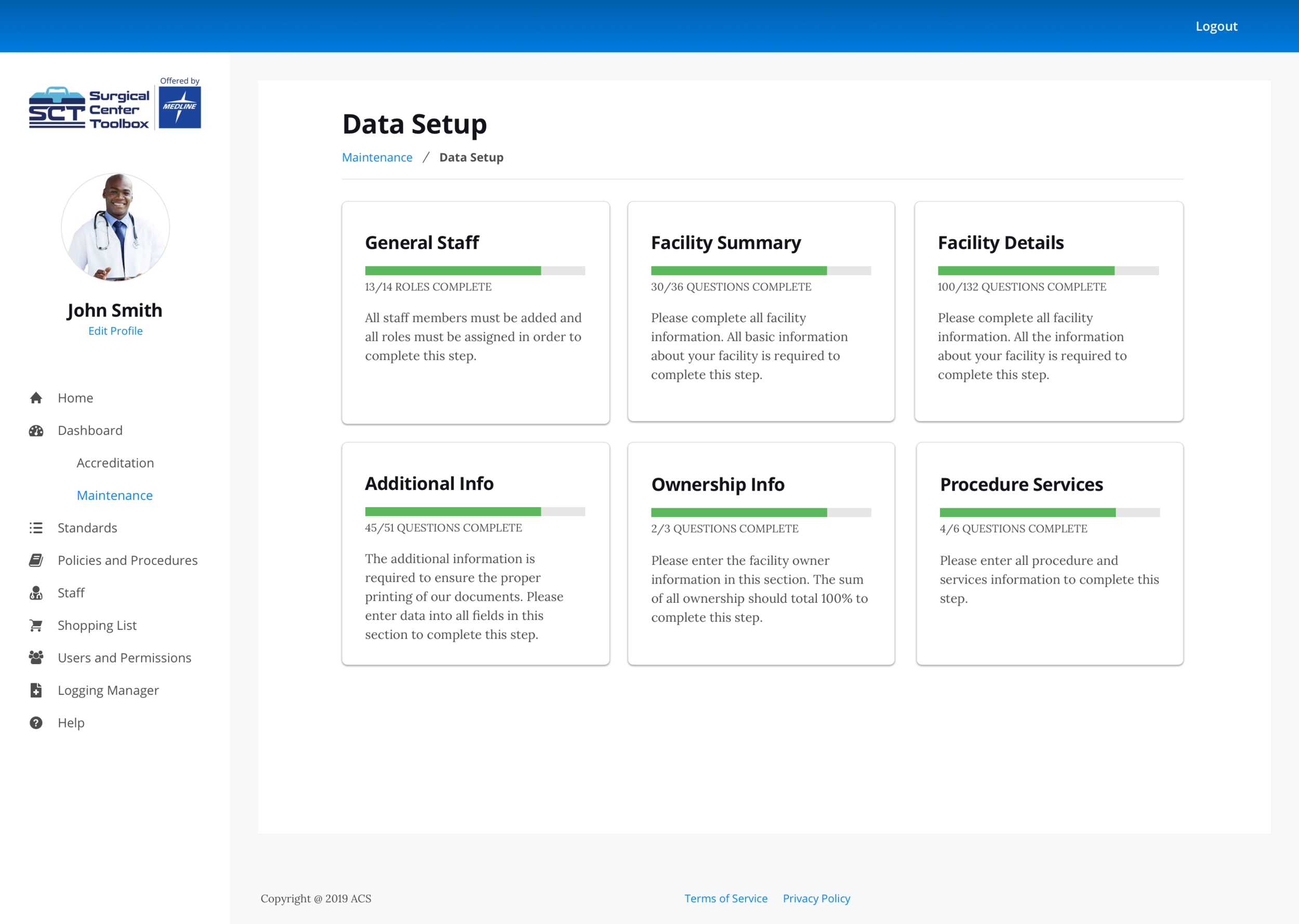
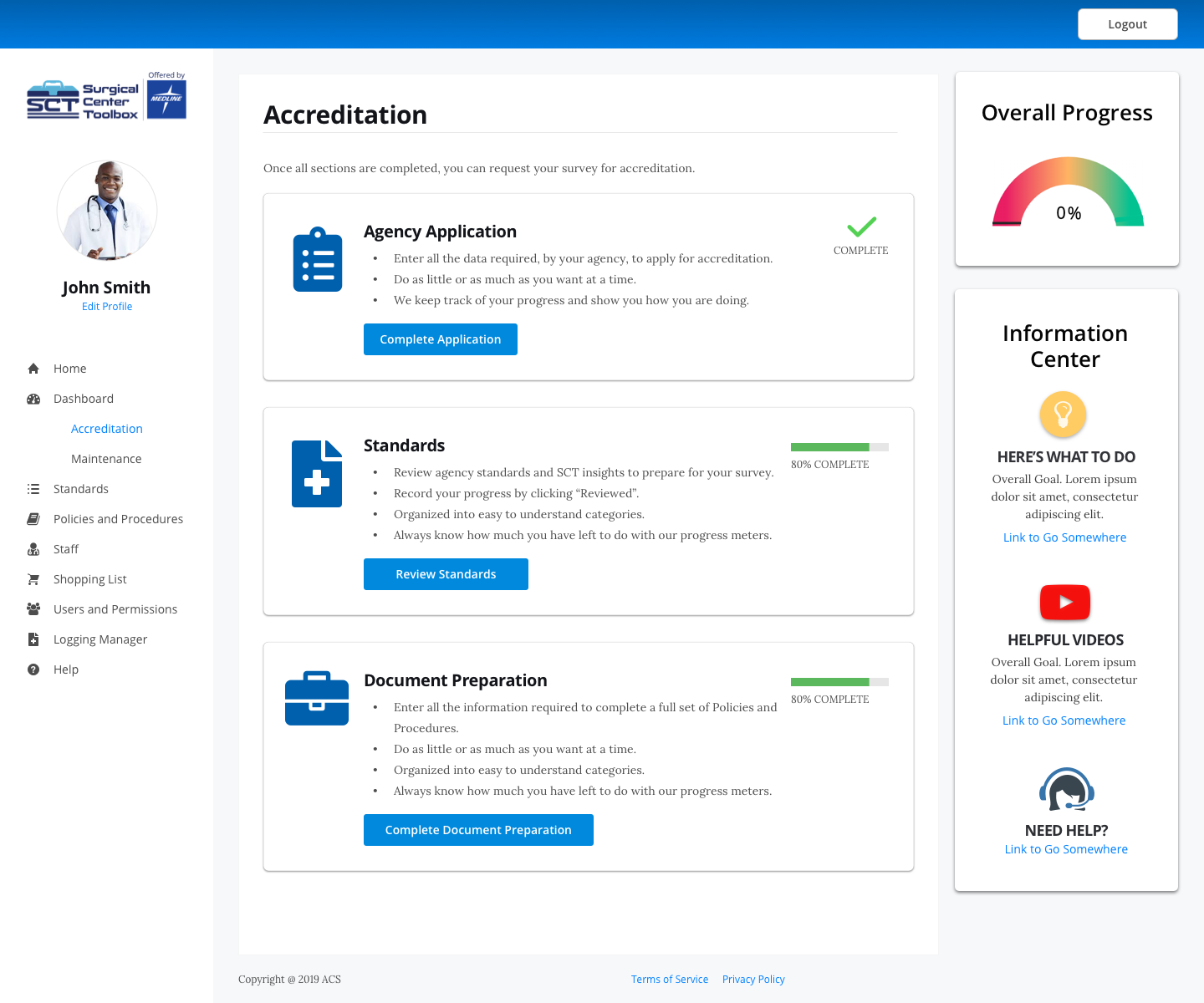
Once designs are complete, wireframes and mockups are placed in their own InVision projects. Clickable prototypes are created, tested against, and iterated based on feedback.
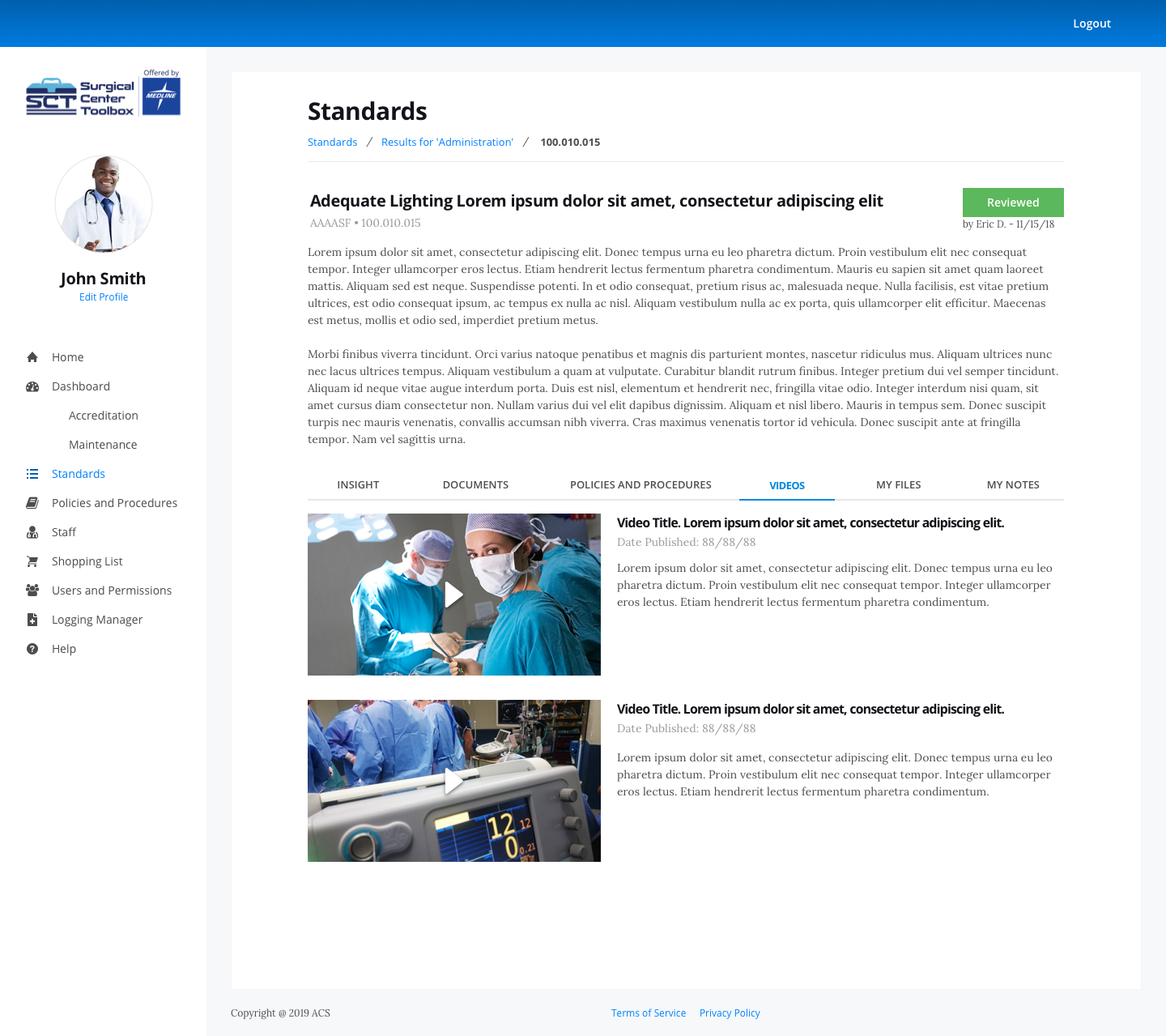
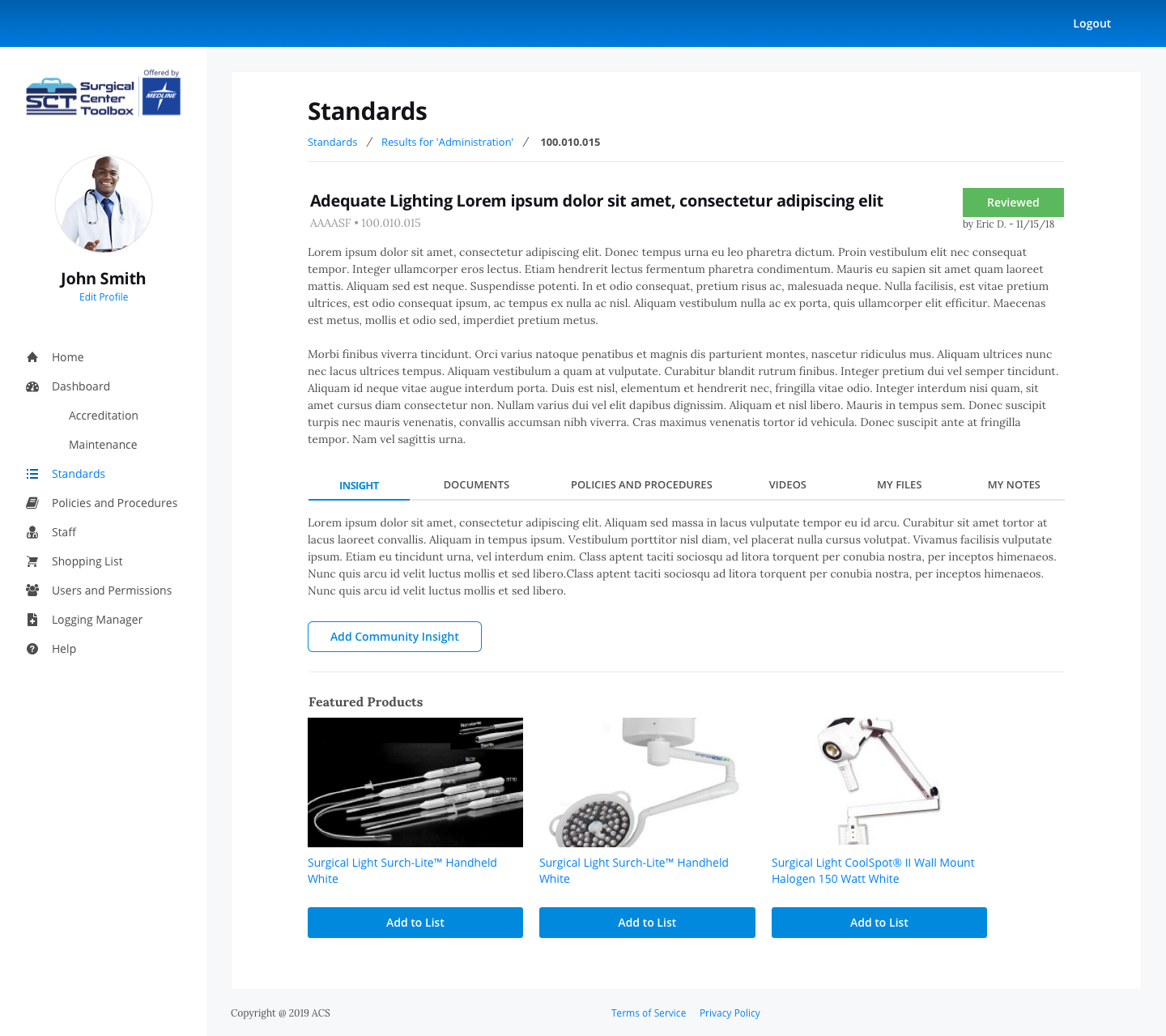
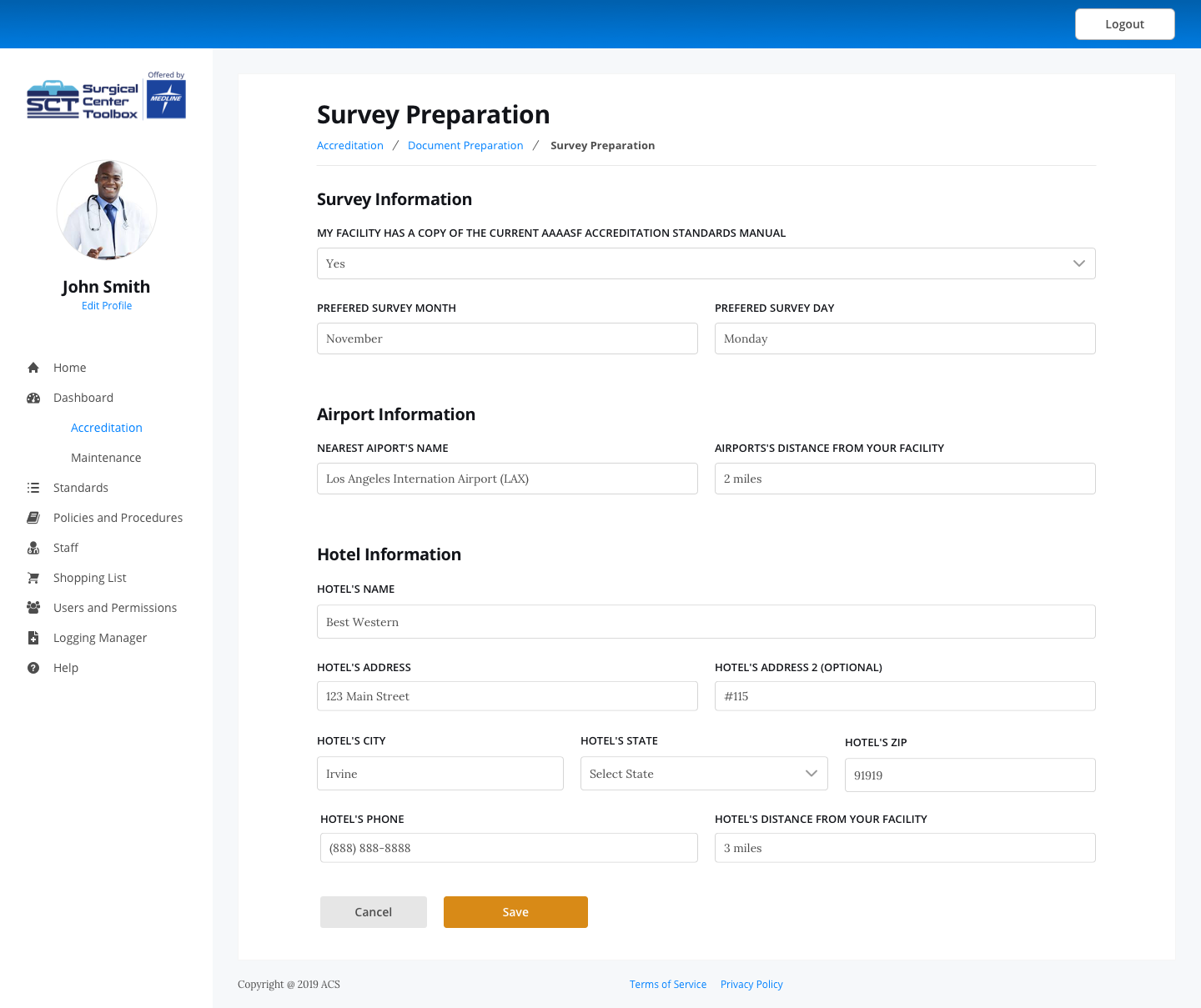
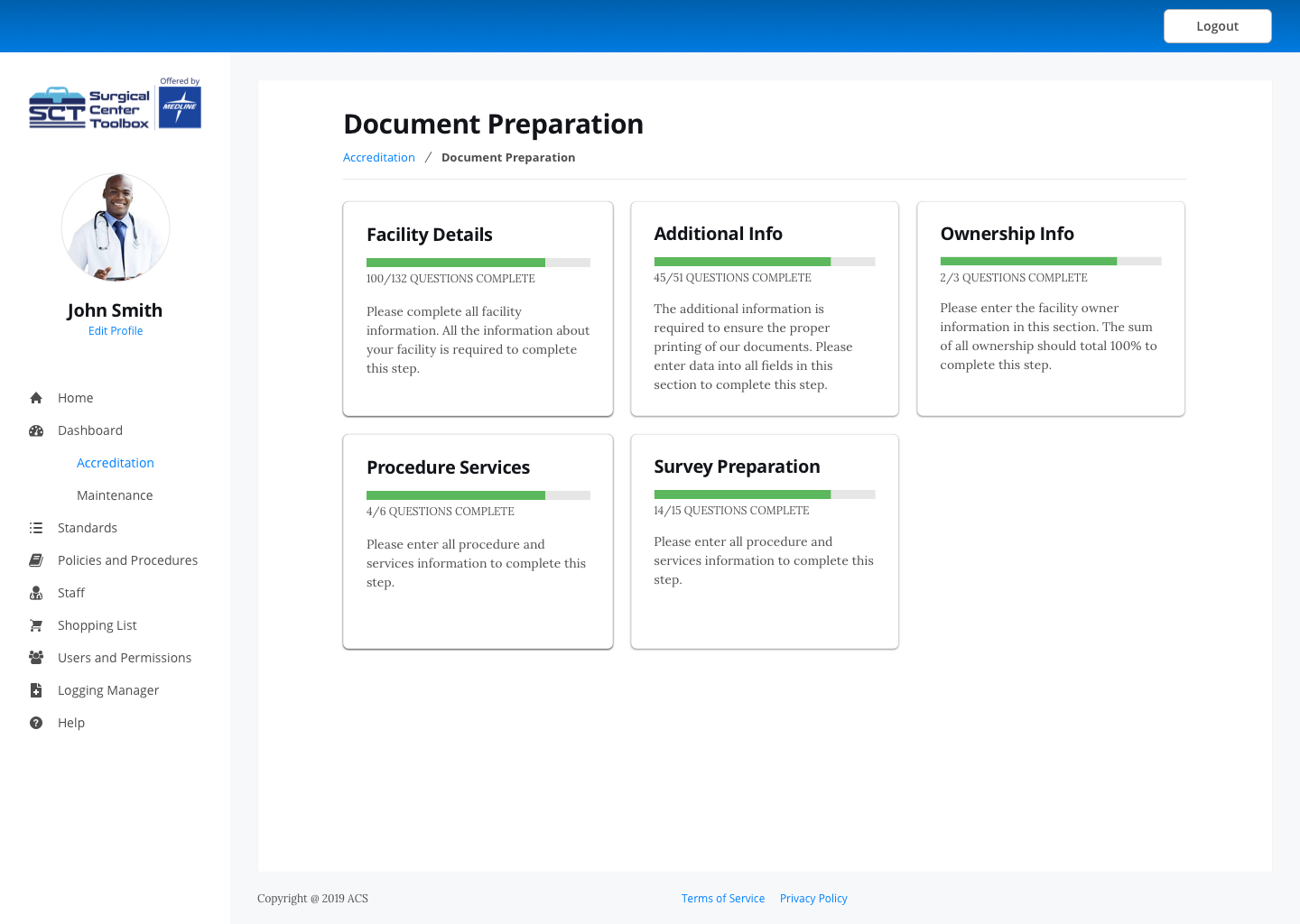
Final Mockups Shown in Prototypes
The Results
Through research the team discovered that the primary user was not the medical director but the director of nursing, followed by the surgical technician. Getting feedback from the primary users gave us the opportunity to iterate and improve the designs. What originally was just a list of agency standards, slowly formed into policies and procedures and digital logging.
Major medical supply companies are currently discussing white-labeling and licensing for the application suite designed, Surgical Center Toolbox. Overall the tool will launch shortly in 65 surgery centers across the United States with a potential $650K deal in the future.